

Article: The Complete Elopement Dress Guide (2026)
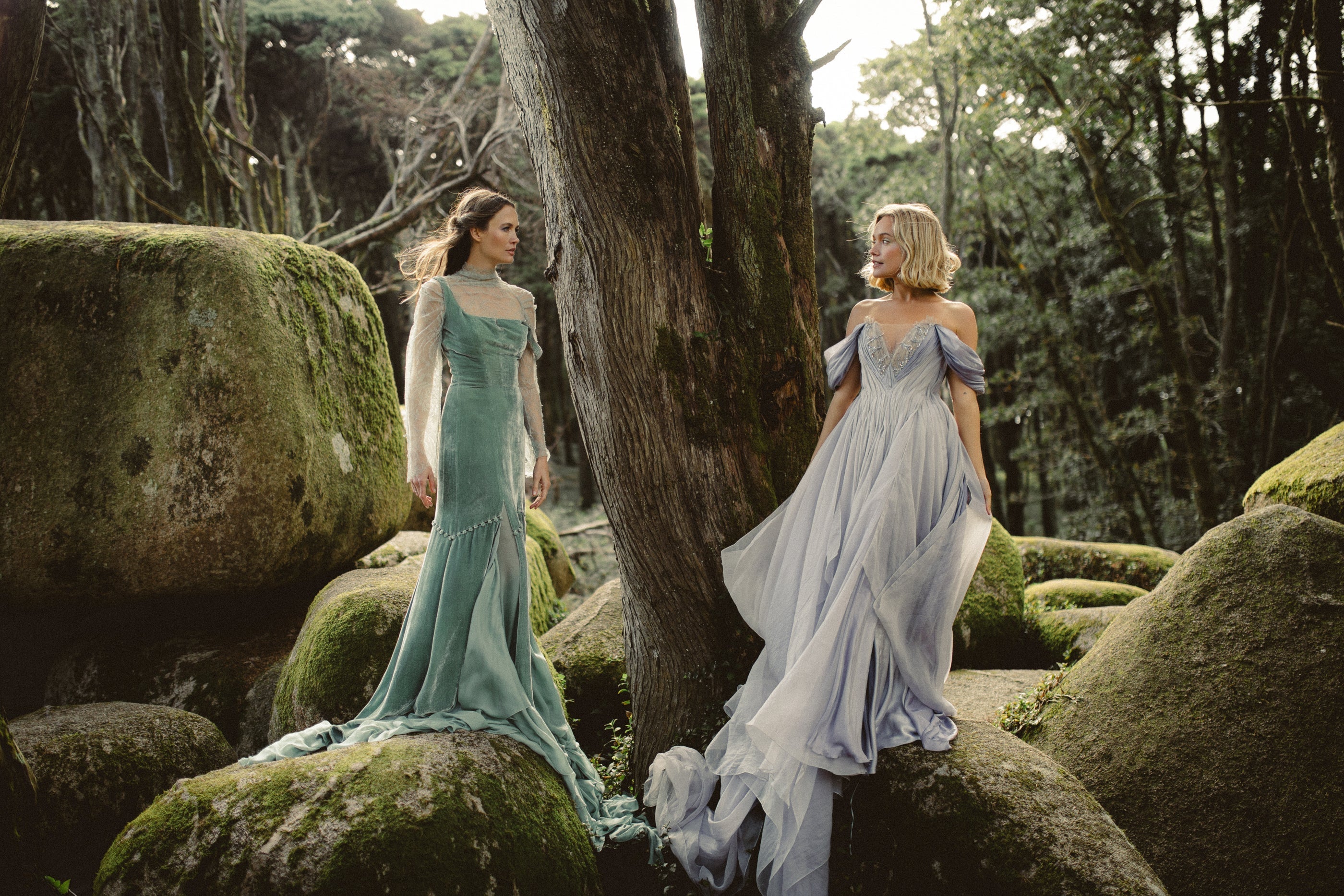
The Complete Elopement Dress Guide (2026)
An elopement dress is a wedding dress designed for an intimate, low-formality ceremony — typically shorter, lighter, and more packable than a traditional gown, with a silhouette that works outside a cathedral setting. If you're getting married at a courthouse, on a beach, on a mountain, in a garden, or in any setting smaller than a 200-guest reception, this is the dress category for you.
The good news for 2026 is that elopement dresses have moved a long way from the "white minidress" stereotype. The category now spans short and long, structured and slip, plain and beaded, $200 and $20,000. The bad news is that almost nobody explains how to choose one. This guide does. It's written by the team at MÝWONY, a couture wedding atelier — we make elopement dresses to measure, but most of the advice below applies whether you're buying from us, from Azazie, from Grace Loves Lace, or from a boutique down the street.
What is an elopement dress?
An elopement dress is a wedding dress chosen for a small, often-traveled, often-outdoor ceremony. It's defined more by context than by silhouette. A long silk slip dress on a Tuscany cliff is an elopement dress. A short tailored mini at a registry office is an elopement dress. A two-piece set on a beach is an elopement dress. The thread running through all of them is that the dress was chosen to work for a specific intimate setting rather than to fill a long aisle in a 500-person church.
In practical terms, an elopement dress usually meets three criteria:
- It travels well. It packs without crushing into something unrecoverable, ships in a manageable garment bag, and ideally fits in a carry-on.
- It works in the venue's actual light and surface. Heavy ball gowns drag in sand. Cathedral trains tangle on mountain rock. Long veils blow into rotating courthouse doors. The dress is chosen so the venue isn't fighting it.
- It photographs without formal staging. No aisle, no flower-girl, no symmetrical altar — just two or three or eight people and your photographer. The dress carries the photo on its own.
Worth noting: the word "elopement" used to mean a secret marriage. In 2026 it usually means an intentional small wedding — often planned for a year or more, often more expensive per-guest than a traditional wedding because the money goes into travel and photography instead of catering for 200. The dresses follow the money: this category is no longer a budget category.
Elopement dress vs. traditional wedding dress
| Feature | Traditional wedding dress | Elopement dress |
|---|---|---|
| Typical silhouette | A-line, ball gown, mermaid with full skirt | Sheath, slip, short, midi, two-piece, A-line |
| Typical length | Floor-length, often with train | Floor-length lightweight, midi, or short |
| Typical fabric | Mikado, duchesse satin, structured organza, heavy lace | Silk crepe, charmeuse, chiffon, soft tulle, lightweight lace |
| Typical weight | 5–15 lbs (2.5–7 kg) | 1.5–5 lbs (0.7–2.5 kg) |
| Veil | Cathedral or chapel-length | Optional; if worn, fingertip or shorter |
| Packing footprint | Large checked garment bag | Often carry-on; always smaller |
| Typical price (ready-to-wear) | $1,500–$8,000 | $200–$6,000 |
| Typical price (made-to-measure) | $5,000–$30,000+ | $2,400–$8,000 |
| On-site preparation | Pressing, often a steamer specialist | Light steam or hand-press |
This table is also the planning checklist. If three out of four columns of your dress lean traditional, you don't have an elopement dress — you have a regular wedding dress that you happen to be wearing at an elopement, which is a choice but not the one most people are looking for when they search "elopement dress."
The eight silhouettes that work best for elopements
These are the silhouettes we recommend most often in the MÝWONY atelier for elopement and small-wedding brides. Most ateliers and most ready-to-wear lines build around the same eight.
1. The slip dress. Bias-cut silk or charmeuse, typically with thin straps, often unlined or lightly lined. The defining elopement silhouette of the last five years. Packs to nearly nothing. Works on beach, in garden, in registry office. Caveat: bias-cut silk shows every undergarment, so the bra/shapewear plan needs to be decided before you commit.
2. The sheath. Body-skimming, floor-length, no skirt volume. Quiet, photogenic, easy to walk in. Strong fit for civil ceremonies, vineyard weddings, urban elopements. Easier than a slip to wear without specialty undergarments.
3. Short — knee-length to mid-thigh. The classic courthouse look. 1960s-revival silhouettes (boat neck, A-line, no train) photograph beautifully in registry-office settings. Add long sleeves for a winter elopement, capped sleeves for summer.
4. Tea-length / midi. Hits between mid-calf and just-above-ankle. The most versatile elopement length — works for courthouse, garden, and beach. Reads as wedding-formal without the train logistics.
5. The A-line (lightweight). A floor-length A-line in silk chiffon or single-layer tulle. Has the silhouette presence of a traditional gown without the weight. Good for venues where you do want some drama but can't haul a ball gown.
6. Two-piece (skirt + top). A separates set — usually a bias skirt with a bodice or blouse top. Sells well for brides who want to wear the top after the wedding, or who plan a short reception change.
7. The jumpsuit / wide-leg pant set. Not for everyone, but right for ~10% of elopement brides. The non-dress option. Particularly strong fit for urban elopements, museum weddings, and brides who never planned to wear a dress.
8. Separates with detachable skirt. A short or sheath base dress with a detachable overskirt. Ceremony in the long silhouette, reception in the short. Two looks, one commission. The highest-effort silhouette to make well, but the most flexible.
In our atelier, the slip and sheath together account for roughly 60% of elopement commissions. The short and tea-length silhouettes are next at ~25%. The remaining ~15% spread across the rest. This isn't a recommendation — it's just what brides actually choose when they have the option.
Choosing your dress by venue
The venue should narrow the silhouette before the silhouette narrows the venue. Here are the venues we see most often and what tends to work.
Courthouse or city hall. Short or tea-length wins almost every time. The buildings are small, the lighting is fluorescent, the photographer has 90 seconds for the kiss. A short dress photographs cleaner in that environment than a long one. Long sleeves read more formal than spaghetti straps in a courthouse — this is one of the few venues where adding coverage adds occasion.
Beach. Slip, sheath, or lightweight A-line. Avoid heavy lace, structured boning, anything with a train longer than chapel. Choose a fabric that handles sea breeze — bias silk drapes well in wind; rigid satin can wrinkle and balloon. If the beach is windy (most are), a slip dress with a back tie is a smart choice — it gives you something to pin a flyaway against.
Mountain or hiking elopement. Tea-length is the practical winner. Floor-length silk slips work if you don't mind a dirty hem and you have a photographer who frames the dirty bit out. Pair with leather or sturdy sandals — heels don't survive the actual hike, even if you brought a pair for the ceremony itself.
Garden or vineyard. A-line or sheath in lightweight silk or chiffon. Vineyards photograph well in soft colors — champagne, ecru, blush — and most ateliers (including ours) can shift the white temperature to match the venue's warmth. Wear-test sandals on grass before the wedding.
Cliff or coastal overlook. Bias slip or sheath in silk crepe. The cliff is the drama; the dress should not compete. Avoid white-bright fabrics — they blow out in coastal sun. Ecru and ivory photograph better.
Snow or winter. Tea-length or short with long sleeves, in heavier silk crepe or wool-blend. Layer with a cashmere cape or tailored coat for the journey to the ceremony spot. Avoid pure white at high elevation in midday — it disappears in the snow on camera.
Urban / loft / restaurant. Sheath, slip, or two-piece. This is the venue where the jumpsuit option is most often chosen. Black, ivory, and champagne all work.
Chateau, villa, palazzo. This is the venue where a lightweight A-line earns its place. The architecture supports a longer silhouette without the weight needing to be cathedral-train.
Fabric guide for elopement dresses
The fabric is more important than the silhouette for whether a dress works as an elopement dress. Here are the fabrics we use most, with notes on how each one travels.
Silk crepe. The atelier's go-to. Mid-weight, matte finish, drapes beautifully, takes a hand-stitched hem well. Travels excellently — refolds at the destination without needing steam in most cases. Recommended for any silhouette, any climate above freezing.
Silk charmeuse. Bias-cut slip's natural home. Glossy, fluid, very photogenic in soft light. Shows every undergarment line — choose seamless. Wrinkles fast if folded; pack on a hanger or roll loosely in tissue.
Silk chiffon. Floaty, transparent, requires lining. Excellent for tropical and Mediterranean climates. Layered chiffon A-line is one of the most elegant destination silhouettes available. Travels well if rolled.
Soft tulle (single layer). Light enough to qualify as elopement fabric when used in a single layer. Multi-layer tulle (the puffy kind) is traditional-wedding fabric, not elopement fabric. Look for "Italian soft tulle" or "English net" on the spec sheet.
Lightweight lace. Chantilly, Alençon, or a similar fine cotton-blend lace. Works well for short and tea-length silhouettes. Heavy beaded lace (the dense floral kind) is too heavy for most elopement use cases.
Crepe de chine. Lighter than crepe, with more drape and a softer surface. Excellent for sheath and short silhouettes. Particularly good for warm-weather ceremonies.
Avoid: mikado, duchesse satin, heavy organza, structured Italian taffeta. These are beautiful in a cathedral and miserable in a carry-on.
On color. Pure bright white is the hardest color to photograph in natural light — it blows out in midday sun and reads as cool in golden hour. Ivory, ecru, champagne, and blush all photograph more reliably. We custom-mix our base whites in the atelier and recommend a fabric warmth match to your venue's lighting; most boutique-tier brands will not do this, which is something to know when comparing.
How long does it take to commission an elopement dress?
Lead times depend on whether you're buying ready-to-wear or made-to-order.
Ready-to-wear (Azazie, BHLDN, Lulus, ASOS-tier): typically 2–6 weeks for production and shipping, plus 2–4 weeks for local alterations. Total from order to wearable: 4–10 weeks. Alterations can fail — if the dress arrives an inch wrong in the bodice, a local tailor may need to rebuild it, which can add weeks.
Boutique ready-to-wear (Grace Loves Lace, Catherine Deane, Shona Joy, BHLDN's better lines): 8–12 weeks for the base dress, plus 4–8 weeks for alterations. Total: 12–20 weeks. Better build quality and the brand-name benefit, but alterations are still on you.
Couture made-to-order (MÝWONY tier, $2,400–$8,000 range): 10–14 weeks from order to ship. The dress arrives fitted to you — minor on-site press only. Express timelines of six weeks are sometimes possible with a rush fee.
Full couture (heritage houses, >$10,000): 6–9 months minimum. Often longer.
The lead time matters more for elopement than for traditional weddings because elopement brides often plan around a specific travel window — the Tuscany week is booked, the photographer is locked in, the venue is paid for. The dress arrival date can't slip. Our recommendation is to commission at least 14 weeks before your travel date, which gives you a clean week before the trip for trying it on at home.
Budget guide — what to expect at each price tier
| Tier | Price range | What you get | Trade-offs |
|---|---|---|---|
| Mass-market | $80–$400 | A dress in 4–6 weeks. Polyester, synthetic lace. Limited size range. | The dress photographs as "the dress you bought online." Likely not re-wearable. |
| Mid-market RTW | $500–$1,500 | Better fabric (some silk blend, real cotton lace). Brand names like Lulus, Azazie's upper tier, BHLDN's mid-line. | Still ready-to-wear; alterations still needed. |
| Boutique RTW | $1,500–$4,500 | Real silk, designed-from-scratch silhouettes. Brands like Grace Loves Lace, Catherine Deane, Shona Joy, Reformation's bridal. | Made to standard sizes; alterations still required. |
| Couture made-to-order | $2,400–$8,000 | The dress made to your measurements. Real couture fabric. Atelier construction, often hand-finished. MÝWONY sits here. | Longer lead time. Less ability to "try before you buy." |
| Heritage couture | $10,000–$50,000+ | A heritage atelier. Months of hand-work. Multiple in-person fittings. | Cost, travel to atelier, lead time. |
Where MÝWONY fits: at the couture made-to-order tier, $2,400–$5,500 typical for an elopement-appropriate dress. The honest comparison: at this price, you're paying for the couture build, the made-to-measure fit, and the fact that the dress will not appear on someone else's Pinterest board next year. You're not paying for a heritage brand name, and we don't pretend otherwise.
Where to shop — an honest map of the 2026 elopement dress landscape
If you're shopping for an elopement dress in 2026, here's where to look, ordered by price.
Under $500: Azazie, Lulus, ASOS, Amazon. The dress will arrive, it will look like the photo, and it will not be hand-stitched. Alterations will likely cost another $150–$400.
$500–$1,500: BHLDN (Anthropologie's bridal line), Reformation, Free People bridal, Azazie's upper tier, Catherine Deane's outlet, secondhand markets like Stillwhite. Better fabric, better construction, more sizes. The mid-market sweet spot.
$1,500–$4,500: Grace Loves Lace, Catherine Deane, Shona Joy, Anna Campbell, Made With Love. Boutique ready-to-wear. Real silk, designed-from-scratch silhouettes, brand recognition. Alterations still needed.
$2,400–$8,000 (made-to-order): MÝWONY (us), Carol Hannah, Anna Wilson, Andrea Hawkes Bridal, plus regional ateliers in most cities. Couture build, made to your measurements, virtual or in-person fitting. The category most underrepresented in mainstream search results.
$10,000+: Vera Wang Bridal, Oscar de la Renta, Monique Lhuillier, Carolina Herrera, and the heritage European houses.
Photographer and planner picks worth reading: Adventure Instead, Katie Dawn Photo, Aimee Flynn Photo, Bethany Small Photography. These photographers shoot elopements full-time and have ongoing roundups of the dresses they see actually arrive at venues.
Frequently asked questions
What is the difference between an elopement and a small wedding?
An elopement is typically the bridal couple plus 0–10 guests, often planned around travel. A small wedding is typically 10–60 guests in a more conventional venue. Dress recommendations overlap heavily.
Do you wear a veil at an elopement?
About half of elopement brides wear a veil; the other half don't. If you do, choose fingertip or shorter — cathedral veils don't work in wind, on rock, or in confined spaces.
Can I wear my wedding dress for the elopement and the reception later?
Yes — many brides do, and the easiest way is a sheath or A-line silhouette that works for both. If you want two distinct looks, a separates set with detachable skirt gives you a long ceremony silhouette and a short reception silhouette from one commission.
What shoes work with an elopement dress?
For most venues, leather sandals, ballet flats, or low block heels. Stilettos sink in grass, sand, and dirt; tall block heels are unreliable on hiking trails.
How do I pack an elopement dress for a flight?
Choose a fabric that recovers — silk crepe is the best traveler. Pack in a soft garment bag (not a stiff box), folded once at the waist with tissue between layers. Carry on if at all possible.
What is a good budget for an elopement dress in 2026?
The range that fits the most elopement brides is $1,500–$5,000. Below that, you're in mass-market territory; above, you're paying for brand or heritage.
Do you need a custom dress for an elopement?
No — there are good ready-to-wear options at every price tier. A custom dress makes most sense if your shape is hard to fit off the rack, if you have a specific silhouette in mind that nobody sells, or if you want a piece that nobody else will be wearing.
Can I wear a dress that isn't white?
Yes. Champagne, ecru, blush, and dove gray are all common in 2026, and any of them photograph more reliably than pure white in outdoor light.
How early should I start shopping for an elopement dress?
For ready-to-wear, 4–6 months before your travel date. For made-to-order, 5–7 months. For full couture, 9–12 months.
What if my elopement is sooner than the lead time?
For an under-10-week timeline, look at boutique ready-to-wear (Catherine Deane and Grace Loves Lace can ship in 6 weeks) or rental (Borrowing Magnolia, Happily Ever Borrowed). Many couture ateliers — including us — also offer six-week express commissions for an additional fee.
Where can I get advice on which dress is right for me?
Contact our atelier — no obligation. You'll get recommendations from our design team based on your venue, body shape, and the photography vibe you want.
A short summary
An elopement dress is a wedding dress designed to work in an intimate ceremony — usually shorter, lighter, more packable than a traditional gown. The category spans every price tier from $200 to $20,000, and the right one for you depends mostly on your venue, your travel logistics, and your timeline. The two most popular silhouettes are the slip and the sheath; the two best fabrics are silk crepe and silk charmeuse. Lead times range from 4 weeks (mass-market RTW) to 9 months (full couture); for made-to-order, 14 weeks is the safe minimum.
To see what a made-to-order elopement dress looks like in practice, browse the MÝWONY Elopement Collection.

