
Corset Wedding Dresses: A Couture Guide to the 2026 Revival
The corset wedding dress is having its biggest moment in three decades. After a long stretch of soft slips and bare-shoulder bodices, brides in 2026 are turning back to structure — the architectural support of boning, the romance of laced ribbon, the way a true corset shapes the silhouette without a single safety pin. This guide walks through the modern corset wedding dress in detail: what it actually is, why it has returned, the markers of couture construction, the body types it flatters, and how to choose one that fits the rest of your day as beautifully as it fits your body.
What is a corset wedding dress?
A corset wedding dress is a gown built around a structured, supportive bodice that uses internal boning, often lacing or buttons at the back, and frequently shaped cups or panels to hold the gown's silhouette without external help. The corset itself can be a separate piece worn over an underdress, an integrated bodice with a defined skirt below, or a couture-engineered foundation hidden beneath softer fabric on the outside.
The defining characteristic is structural support: a real corset shapes the body, supports the bust without a separate bra, and holds the gown's line through hours of movement. This is why corset gowns photograph so beautifully — the silhouette stays clean from ceremony through reception — and why couture corset construction is one of the slowest, most labour-intensive categories in bridal.
Why corset wedding dresses are back in 2026
Three forces have brought the corset back into the centre of bridal:
- The basque-waist revival. 2026 has seen one of the largest shifts in bridal silhouette in recent years — a return of the structured, defined waist after a decade of empire and slip dominance. The corset is the most direct expression of this shift.
- A renewed appetite for craft. Brides are increasingly choosing gowns whose construction is visible — hand-applied lace, hand-stitched silk flowers, and yes, hand-fitted corsetry. A well-made couture corset is one of the clearest expressions of bridal craft, and one of the hardest details for a high-street brand to replicate.
- Body-positive, body-honest dressing. The modern corset is no longer about reducing or constraining; it is about supporting and shaping. Brides are choosing corset gowns precisely because they hold the body the way a custom-fitted garment should — with comfort, with structure, and without the awkward additions (separate bras, shapewear, double-sided tape) that softer gowns require.
For more on the broader season, our 2026 wedding dress trend report covers the corset revival alongside related shifts in romantic volume, color beyond ivory, and modular gowns.
The anatomy of a couture corset wedding dress

Not every gown described as "corset-style" is actually built like one. The markers below distinguish a true couture corset from a fashion-corset look. They are also the reason a couture corset gown costs what it costs.
1. Internal boning
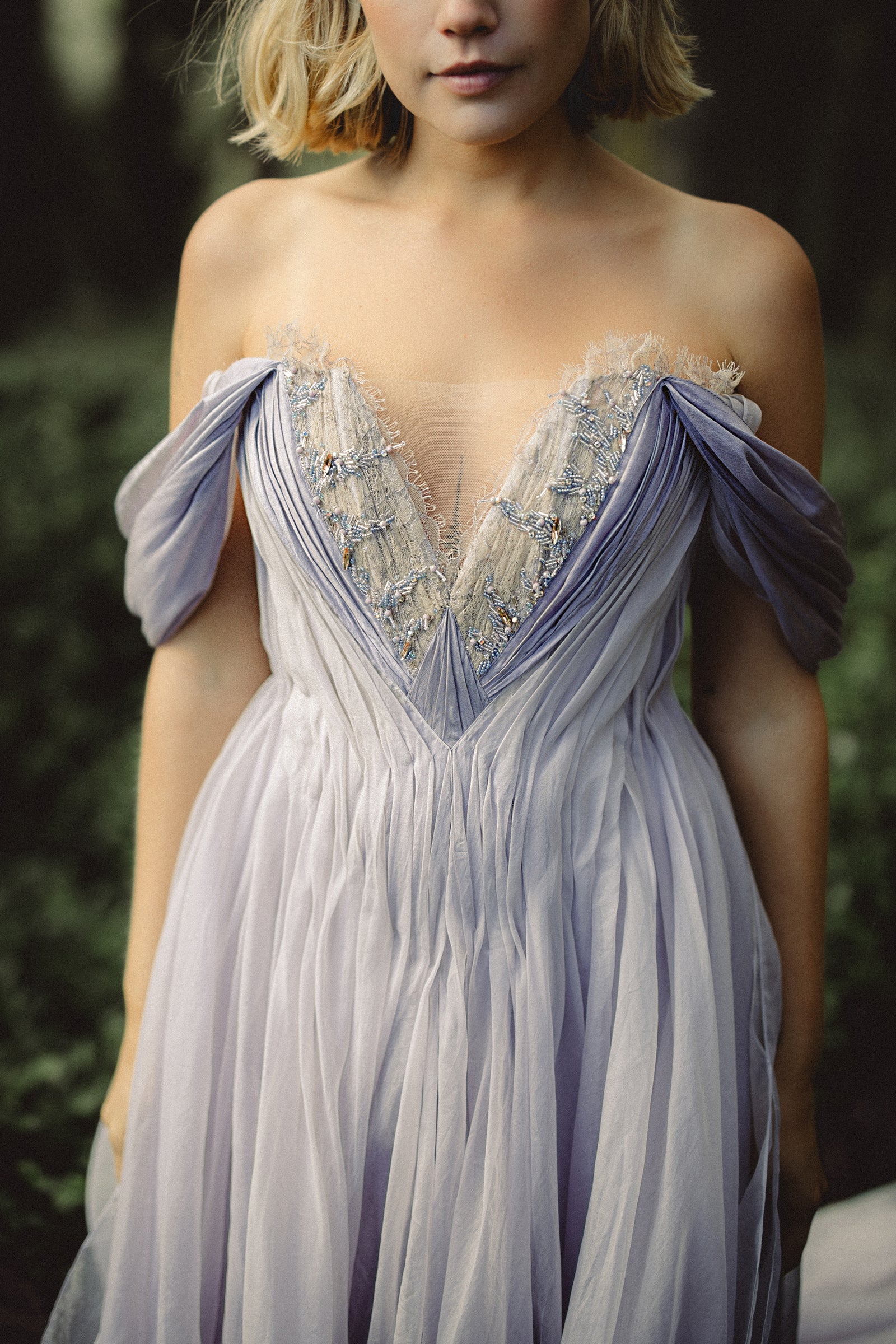
The structural skeleton of any real corset is its boning — a series of vertical channels containing flexible-but-firm strips (historically whalebone, now usually steel or polymer) that hold the silhouette upright and shape the torso. A couture wedding corset will have eight to twenty bones, placed precisely along the seams to support the bust, define the waist, and prevent the bodice from collapsing or rolling at the top edge. The Mýwony Flidais uses a fully boned corset construction with internal cups, which is why the bodice holds its shape regardless of how the wearer moves.
2. Built-in cups or shaped bust panels
A true corset wedding dress eliminates the need for a separate bra. Internal cups, shaped panels, or moulded bust support are sewn into the bodice itself, fitted to the bride's specific bust and underbust measurements. This is one of the most important comfort markers — without it, brides spend the day adjusting straps that were never designed to be there.
3. Lacing, buttons, or hidden zip closure
The closure system shapes the silhouette. Traditional ribbon lacing is the most adjustable (and the most photographed when worn at the back); a long row of fabric-covered buttons creates a softer, more romantic line; a hidden zip closure is the most minimalist option. The Silynne uses adjustable lacing; the Calypso Nightfall uses a hidden zip with a black belt and hook closure.
4. A natural-silk lining
The inside of a corset gown matters as much as the outside. A couture corset will be lined in soft silk — silk crêpe de chine, silk charmeuse, or silk crash chiffon — so that the structure sits comfortably against the skin for a full wedding day. Synthetic linings tend to read clammy in warm weather and to wear unevenly over a long event.
5. Fabric outer layer
The external fabric of a corset gown is usually one of: hand-applied lace (Chantilly, Alençon, guipure), beaded tulle, silk satin, silk organza, or silk crash chiffon. Hand-application of lace and beading onto a corset bodice is one of the most time-consuming steps in bridal couture — expect twenty to forty hours of atelier work for a fully embellished bodice.
6. Drafted to your own measurements
This is the difference between a corset and a corset-shaped bodice. A real couture corset is drafted to the bride's bust, underbust, waist, hip, front waist length, back length, and shoulder measurements — the exact set you will find on our measurement guide. An off-the-rack corset bodice is drafted to a generic chart and will rarely fit the curves of any real body without substantial alteration.
The types of corset wedding dresses
"Corset wedding dress" covers a broader stylistic territory than most brides realize. The five variations below are the most common, and the right choice depends on your aesthetic, your venue, and your body type.
The traditional boned corset bodice with full skirt
The classic vision of a corset wedding dress: a structured, fully-boned bodice meeting a full A-line, ball gown, or tiered skirt at the natural waist. The silhouette is dramatic, the structure is uncompromising, and the look is unmistakably bridal. The Mýwony Flidais is built on this principle, with a fully beaded boned corset over a silk organza skirt and asymmetric ruffles inspired by forest branches.
The beaded lace corset
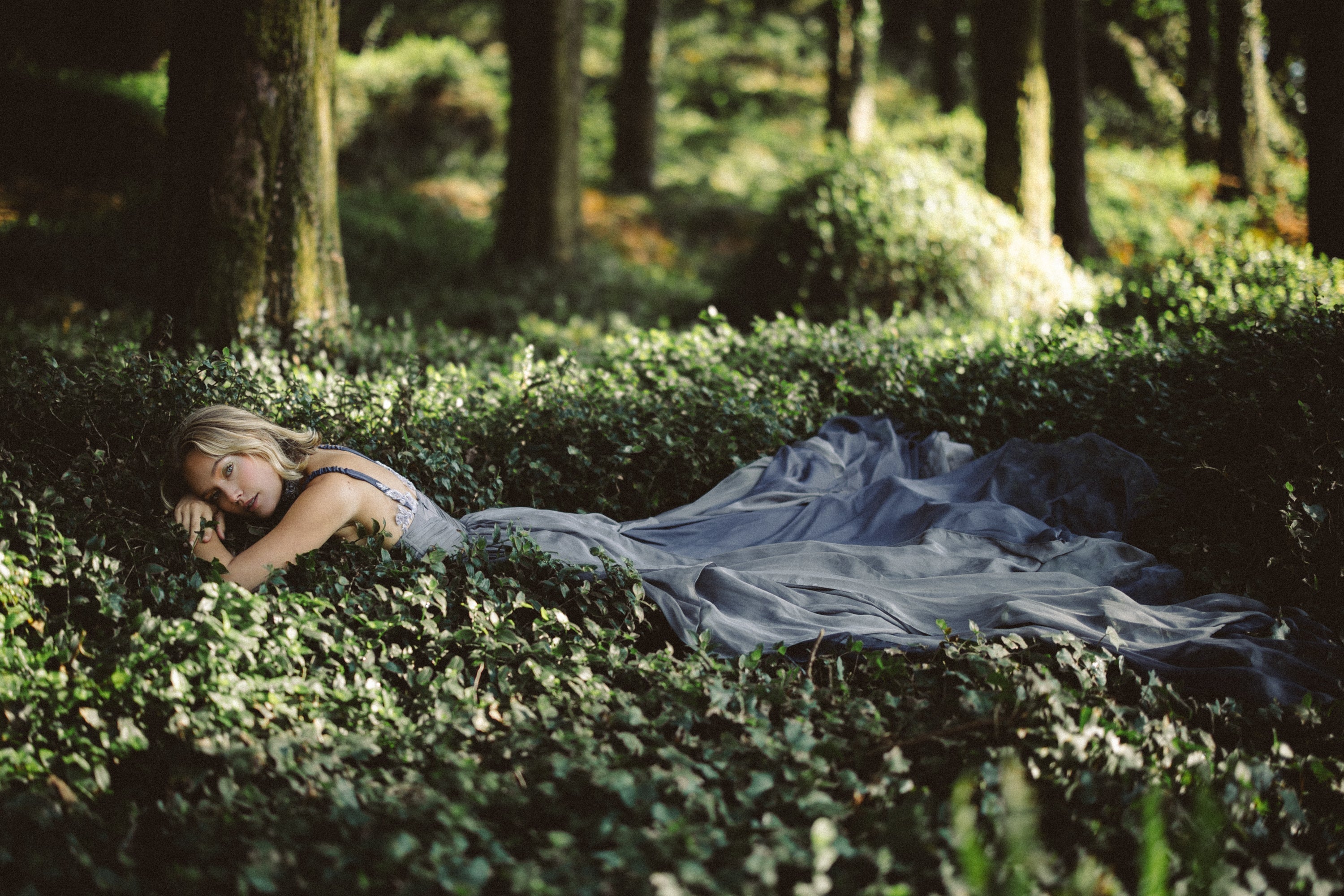
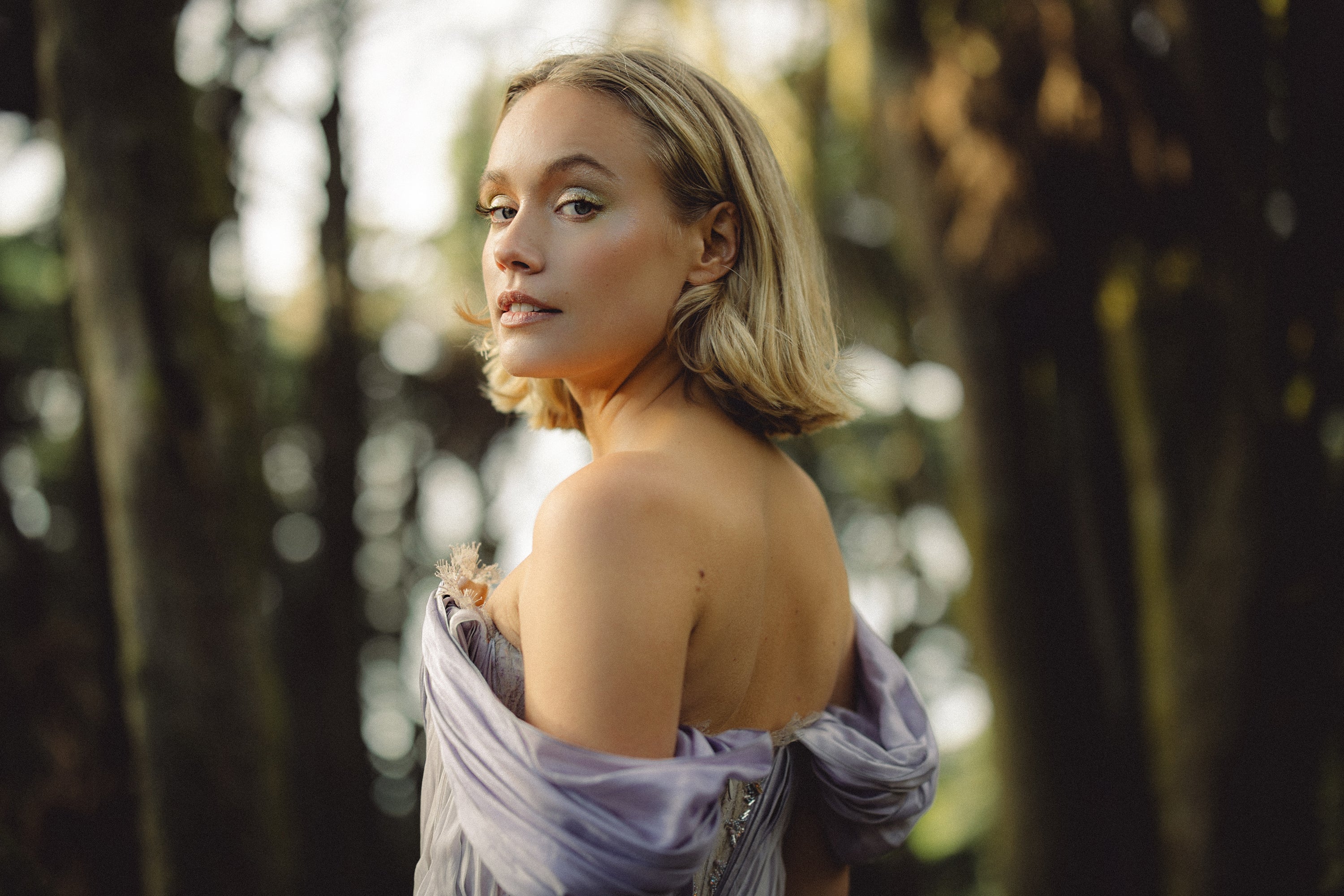
The most romantic and most sought-after variation. The corset bodice is overlaid in hand-applied lace and seed beading, often extending into illusion sleeves or an illusion neckline. The structural boning is hidden inside; what the eye sees is a delicate, jewelled bodice that appears almost weightless. The Silynne from our current Spells of the Whispering Forest collection is the Mýwony reference — a beaded lace corset in dusty lavender with adjustable side lacing.
The open-back corset with lacing
A corset that lets the structure speak openly. The back is partly open, with visible ribbon or fabric lacing as a design feature rather than something hidden. This style photographs beautifully from behind and is one of the most architectural choices in bridal — particularly suited to brides who want a defined, sculptural silhouette without losing the romance of the look.
The strapless or off-shoulder corset
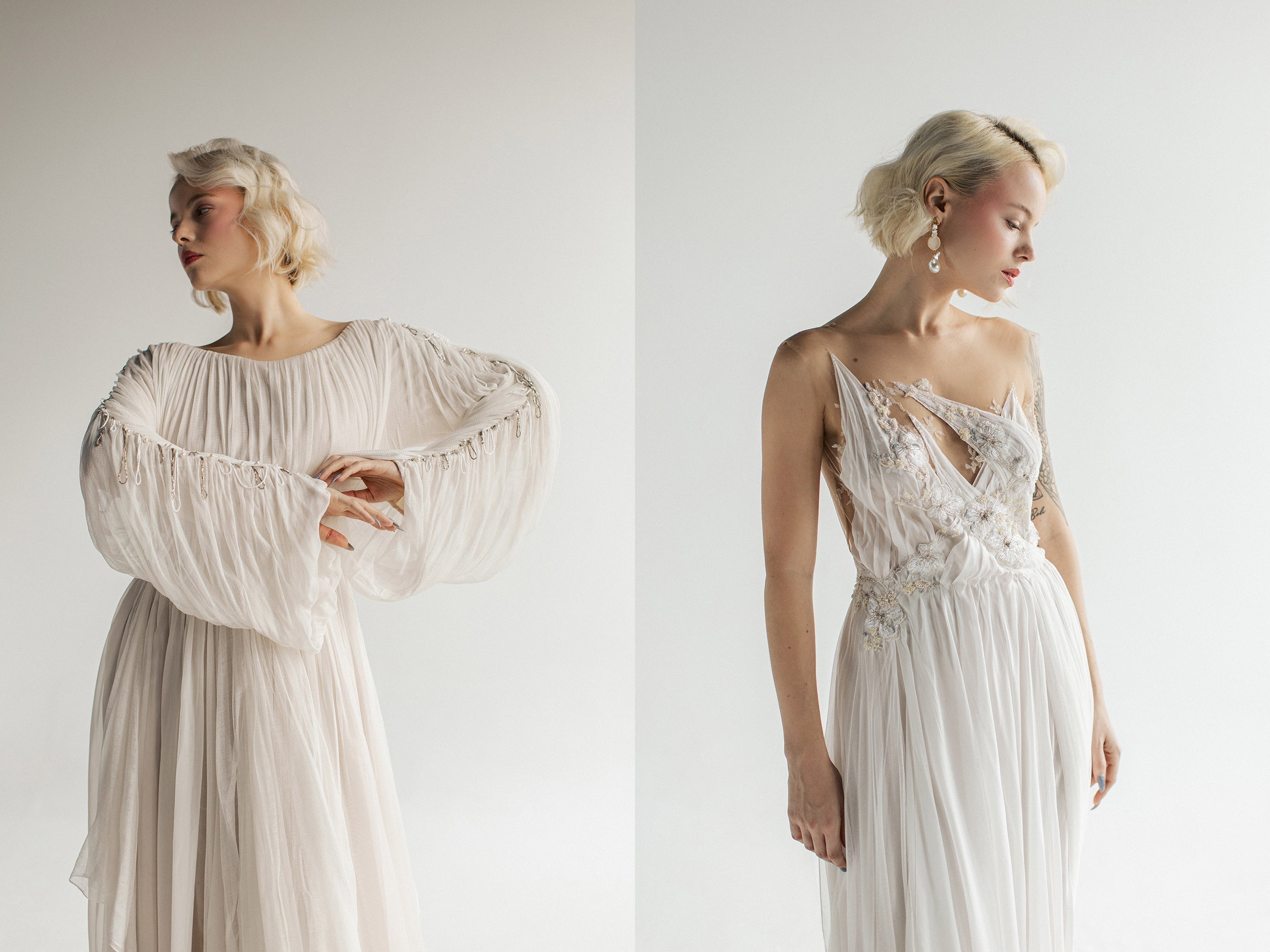
The corset bodice carries the gown without straps, freeing the décolletage and shoulder line entirely. Modern off-shoulder corset gowns — like the Flidais with its off-the-shoulder voluminous sleeves resting away from the corset itself — combine the structural support of corsetry with the romantic openness of bare shoulders. This is the most-photographed corset style of 2026.
The modern internal corset (couture engineering)
The most quietly luxurious corset variation. The structural corset is fully internal — sewn into the lining of the gown — while the outer fabric reads as soft, draped silk or translucent mesh. The bride wears what looks like a fluid, modern gown but is wearing a fully-engineered couture corset underneath. The Mýwony Phaeno is built this way: a translucent ivory mesh and tulle exterior over a nude sweetheart corset, slim-fitted through the hips. The visual effect is contemporary and unexpected; the structural support is uncompromising.
The two-piece corset (separates)
A separate corset top worn over a distinct skirt — the most flexible and most personalisable corset configuration. It allows the corset to be paired with multiple skirts (a fuller skirt for the ceremony, a slimmer one for the reception), travels well for destination weddings, and lets brides who love the corset bodice but want to keep the option of a softer overall silhouette have both at once. The Laetisse from Spells of the Whispering Forest is a separates set built on this principle — an off-shoulder silk crash chiffon top over a beaded tulle skirt with hand-stitched silk flowers.
The ball gown corset — the most classical pairing

If we had to nominate a single archetype of the corset wedding dress, it would be the corset bodice meeting a full ball gown skirt — the silhouette of cathedral weddings, formal venues, and the most formal evening receptions. The structured bodice creates a defined, narrow waist; the volume of the skirt amplifies the contrast and creates the most dramatic hourglass silhouette in bridal.
The Mýwony Calypso Nightfall is the couture interpretation of this classical pairing — a sleeveless beaded top in floral lace over a multi-layered tulle and satin skirt, joined by a hidden zip and a black belt with hook closure. The construction allows the top and skirt to read as one unified gown while preserving the structural integrity of a true corset bodice.
Which body types suit corset wedding dresses?
The corset is among the most flattering silhouettes in bridal precisely because it is built around your body, not around a generic ideal. That said, certain body types have a particular affinity for the silhouette:
- Hourglass — the corset is the natural expression of the hourglass figure. The defined waist becomes the focal point of the gown.
- Pear — the corset bodice draws the eye upward and adds visual structure to balance the hip line. Particularly effective when paired with a full ball gown skirt that skims the hips.
- Rectangle — the corset is one of the few silhouettes that creates a defined waist on a straighter figure. The structural shaping does what the body alone may not.
- Plus-size brides of any shape — couture corset construction (with proper boning, internal cups, and a fitted lining) is one of the most supportive and flattering options in bridal, regardless of size, because the structure does the work that ill-fitting off-the-rack gowns cannot.
Apple figures should approach corsets with care — a tight corset across the midsection can emphasize what an empire silhouette would conceal. A modern internal corset (like the Phaeno) with a softer outer drape can be a good compromise. For a more detailed body-type-by-silhouette breakdown, see our companion guide on wedding dress styles for your body type.
Styling a corset wedding dress
Necklines
The four most flattering corset necklines are: sweetheart (the most classical and romantic), straight strapless (the most architectural), off-shoulder (the most editorial in 2026), and illusion (where a transparent mesh extends above the corset bodice carrying scattered embroidery). The choice has more to do with personal style and venue than with body type — all four work on most brides.
Sleeves — or the absence of them
The corset can be worn entirely strapless (the structural support means it stays put) or paired with detached sleeves — long bell sleeves in lace, off-shoulder draped sleeves, voluminous puff sleeves, or sheer illusion sleeves. The Mýwony Flidais uses off-shoulder voluminous sleeves that sit away from the corset bodice itself, creating two distinct visual layers.
Fabric pairing
The corset bodice and the skirt fabric should complement, not match. A common pairing: a beaded lace corset with a soft tulle or silk crash chiffon skirt, so the eye reads the corset as the structural element and the skirt as the fluid one. Another classical pairing: a smooth silk satin corset with a layered tulle ball gown skirt — the contrast creates the dramatic line of the silhouette.
Veil and accessories
A corset gown carries enough visual weight on its own that styling should be restrained. A long, single-layer veil in fine tulle is the most photographed pairing; a long ribbon at the back of the corset can substitute for or complement the veil. Avoid heavy jewellery if the corset is already beaded; a single pair of pearl earrings is usually all the bodice needs. From our current Spells of the Whispering Forest collection, the Vea Veil in blue-grey or the Blooming Veil with hand-applied silk flowers both pair beautifully with a beaded corset.
Modern interpretations of the corset gown

The 2026 corset wedding dress is rarely the literal Victorian corset of period costume. The most contemporary interpretations — including most of Mýwony's couture corset gowns — treat corsetry as the engineering underneath the gown rather than the visible style on top of it. A bride wears what looks like a fluid, modern gown but moves through the day with the support of a fully-built couture corset.
This is the direction most couture houses have moved in: the architectural confidence of a corset, expressed through softer, more contemporary outer fabrics. The Mýwony Phaeno illustrates the principle — what you see is translucent ivory mesh, tulle volume, and an asymmetric boat-to-V neckline; what holds it up is a meticulously constructed nude corset underneath. The Laetisse from Spells of the Whispering Forest applies the same logic to a two-piece set, with structural support hidden inside an off-shoulder silk crash chiffon blouse.
The Mýwony approach to couture corsetry
Every Mýwony corset is hand-built to the bride's specific measurements in our atelier, beginning with a bespoke pattern drafted from the bust, underbust, waist, hip, and torso-length readings. The internal boning is positioned by hand — eight to twelve bones for a soft corset bodice, twelve to twenty for a fully structured couture corset — and the bust support is shaped to the bride's own cup volume rather than fitted with generic moulded cups. The lining is always a soft natural silk: silk crêpe de chine for most gowns, silk charmeuse where extra fluidity is needed.
The outer fabric and embellishment are then applied by the same atelier team. Hand-applied lace can take twenty to forty hours of work for a fully covered corset bodice; beaded embroidery can take longer still. The result is a gown whose structural integrity and surface artistry are equally couture — the only kind of corset wedding dress we believe is worth making.
If any of these gowns speak to you, we would be glad to begin the conversation. Most Mýwony corset gowns take eight to twelve weeks to construct, and the calendar fills fastest in late spring and early autumn.
Frequently asked questions
What is a corset wedding dress?
A corset wedding dress is a gown built around a structured, supportive bodice with internal boning, often with lacing or buttons at the back, and frequently with built-in cups or shaped panels that hold the silhouette without external help. A real couture corset wedding dress eliminates the need for a separate bra, holds the gown's line through hours of movement, and is drafted to the bride's specific measurements rather than to a generic chart.
Are corset wedding dresses in style for 2026?
Yes — significantly so. The corset has returned as one of the defining structural shifts of 2026 bridal, driven by the broader basque-waist revival, a renewed appetite for visible craft, and a generation of brides choosing structural support over the slip-dress minimalism of recent years. Modern interpretations — particularly the internal couture corset hidden under softer outer fabric — are the most-requested 2026 corset variation.
Are corset wedding dresses comfortable?
A well-made couture corset is significantly more comfortable than the alternatives, because it eliminates the need for separate bras, shapewear, and tape. The structural support of a fitted corset holds the bust without straps, supports the back, and does not slip or roll across a long day. The discomfort associated with corsets is almost always a function of off-the-rack gowns built on generic patterns rather than to the wearer's measurements.
Do you need to wear a bra with a corset wedding dress?
No. A real corset wedding dress is built with internal cups or shaped bust support drafted to your own measurements, which replaces the need for a bra entirely. This is one of the largest comfort and visual advantages of a corset gown — no straps to manage, no band to bind, no awkward strap visibility under sheer fabric.
What body types look best in a corset wedding dress?
Hourglass, pear, and rectangle figures find corsets particularly flattering, because the defined waist either echoes the natural silhouette (hourglass), balances a fuller hip line (pear), or creates curves on a straighter frame (rectangle). Plus-size brides of any shape often find couture corset construction the most supportive and flattering option in bridal. Apple figures may prefer a modern internal corset under softer outer fabric to a tight corset across the midsection.
What is the difference between a corset wedding dress and a basque waist?
A basque waist describes a waistline that dips below the natural waist into a V or pointed shape; a corset is a structural bodice with internal boning. A corset wedding dress can have any waistline (natural, basque, drop), and a basque-waist gown can be cut with or without true corset construction. They are often combined — a basque-waist corset is one of the most flattering silhouettes for hourglass and tall figures — but they are not the same thing.
How much does a couture corset wedding dress cost?
Couture corset wedding dresses sit at the higher end of bridal pricing because of the labour involved — pattern drafting, hand-positioning of boning, internal cup construction, hand-applied lace or beading, and multiple fittings. Expect couture corset gowns in the range of approximately $3,500 to $7,800 for fully bespoke construction in natural silk with hand-worked detailing. The Mýwony Whispering Forest corset gowns sit in this range.
Can a corset wedding dress be altered?
Most aspects of a couture corset can be adjusted at fitting — the lacing accommodates a few centimetres of variation in either direction, and the hem, train length, and sleeve fit can all be fine-tuned. What cannot easily be altered is the cup size or the placement of the bust panels, which is why made-to-measure (built from your bust and underbust readings to begin with) is so important for corset gowns specifically.
How far in advance should I order a corset wedding dress?
For a couture made-to-measure corset gown, allow a minimum of six months between ordering and wedding day, and ideally nine to twelve. Corset gowns require more atelier time than most other silhouettes (typically eight to twelve weeks of construction plus two to three fittings), and high-quality natural-silk fabrics often need to be ordered specifically.
What kind of fabric is used for a couture corset wedding dress?
The structural corset itself is usually built from a stiffer foundation fabric (cotton coutil or silk taffeta), with internal boning and a soft natural-silk lining (silk crêpe de chine or silk charmeuse). The outer layer of the corset bodice is most commonly hand-applied lace (Chantilly, Alençon, guipure), beaded tulle, silk satin, silk organza, or silk crash chiffon — all natural fibres, chosen to age beautifully and to feel soft against the skin across a long wedding day.
Beginning your corset gown search
If a corset wedding dress is the direction you are leaning, the best next step is to see one in person. The current Spells of the Whispering Forest collection includes several corset gowns — the Silynne in dusty lavender beaded lace, the Laetisse as a two-piece corset set in silk crash chiffon, and the Faelynne as the off-shoulder romantic version. The Flidais from our 2024 collection is the most architectural — a fully boned beaded corset with off-shoulder voluminous sleeves — and the Calypso Nightfall is the most classical, a corseted ball gown for cathedral or formal indoor venues.
You can browse the full Mýwony bridal collection or the 2024 collection, and to go deeper on adjacent silhouettes, our wedding dress styles chart covers basque, drop-waist, ball gown, and mermaid in detail. To see how the corset fits within the wider 2026 trend picture, our trend report is the right starting point. And when you are ready to begin a fitting, our measurement guide will save you time at the first appointment.