
The Bohemian Bride: A Complete Style Index for 2026
The bohemian bride is not a costume. She is a sensibility — a particular way of holding a wedding day that prizes naturalism over ceremony, hand-work over polish, and a quiet, considered beauty over the conventionally bridal. This is the Mýwony index for her: a complete style guide for the bohemian bride of 2026, covering everything from the gown and the veil to the hair, flowers, jewellery, shoes, and the photograph that closes the day.
Who is the bohemian bride?
She is the bride who chose her wedding location first and her dress second. Who would rather hear her guests describe her gown as "so her" than "so beautiful". Who is drawn to small-batch designers, vintage fabrics, and gowns with a story. She is as likely to wed in a meadow in Provence as in a city hall in Brooklyn, and her gown will speak the language of both.
The bohemian bride of 2026 has matured. She is no longer the festival bride of the 2010s, with feathers and turquoise and fringed sleeves. She has kept the freedom and the naturalism but exchanged the costume for the couture — she still wants the dress to let her dance barefoot through the grass, but now in silk crash chiffon rather than polyester rayon. She is, in short, the couture-bohemian bride: refined, considered, and unmistakably herself.
This guide walks through every element of her style.
The dress
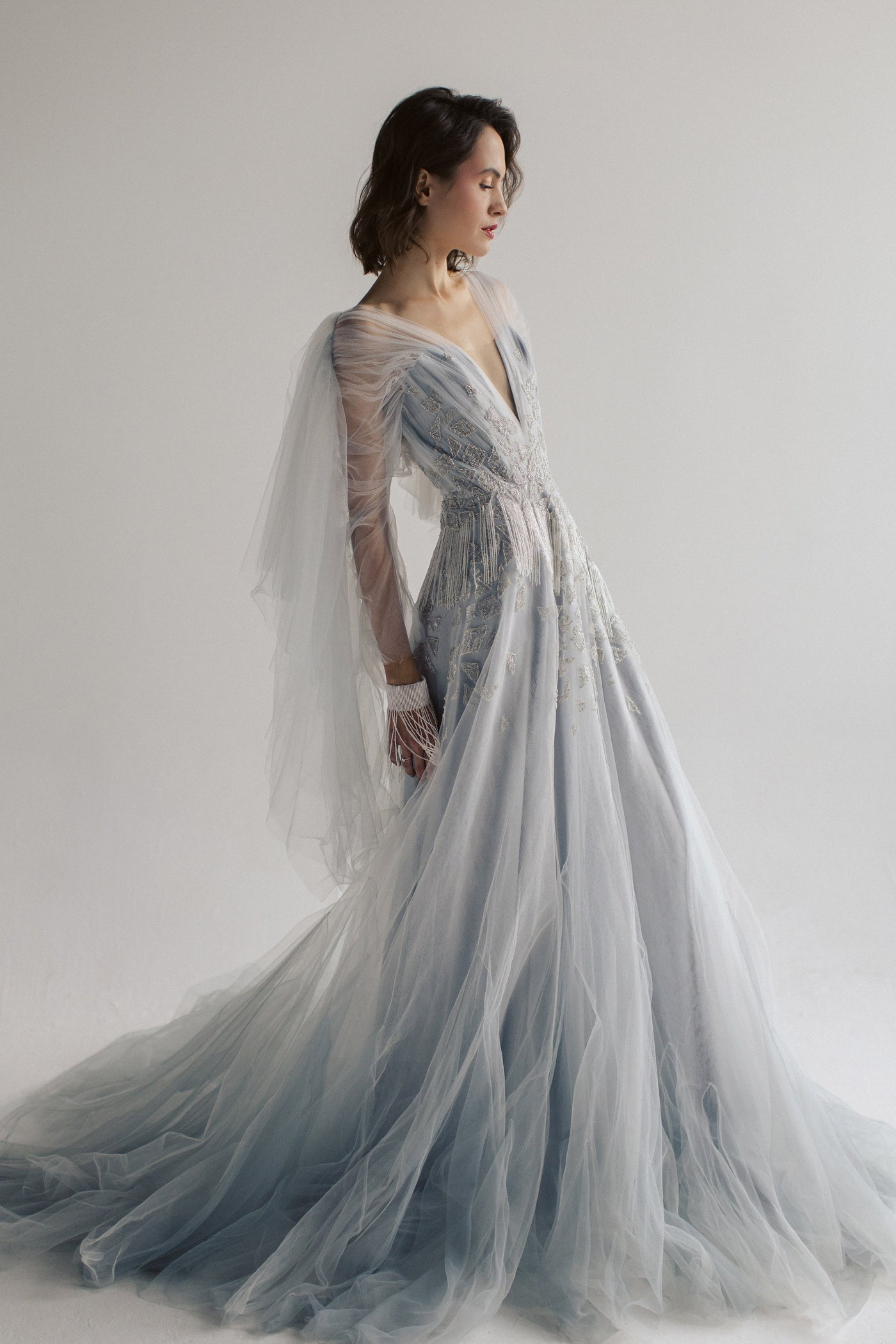
A bohemian wedding dress is a gown that prioritizes movement over structure, texture over shine, and individuality over convention. It may be cut as an A-line, a sheath, an empire, a tiered skirt, a slip, a corset, or a two-piece. What unites every bohemian gown is a feeling: that the bride wearing it is entirely, unmistakably herself.
The Mýwony bohemian aesthetic is built on three principles: natural silks (silk crash chiffon, silk crêpe de chine, silk georgette, silk organza), hand-work (hand-applied lace, hand-stitched silk flowers, hand-positioned beading), and made-to-measure construction (every gown drafted from the bride's own measurements rather than a generic chart). These are the markers that distinguish couture-tier bohemian from high-street bohemian.
For a complete walk-through of the silhouettes, fabrics, and details that define a bohemian wedding dress, see our Ultimate Guide to Bohemian Wedding Dresses. For a lookbook of nine specific Mýwony lace gowns, the Bohemian Lace Wedding Dresses lookbook is the right entry point. For the corset variation specifically, our corset wedding dress guide covers the structural-romantic version of the aesthetic. And to find the silhouette that suits your body, our body type guide walks through every option.
The veil — or its beautiful alternatives
The veil is one of the most revealing decisions in bohemian bridal styling. The traditional cathedral-length single-layer veil in fine plain tulle is a quietly stunning pairing for almost any bohemian gown, especially in photographs — the veil moves with the wind in a way nothing else does. But the bohemian bride is just as likely to choose:
- A scattered floral veil — soft tulle with hand-applied silk flowers across its length. The Mýwony Blooming Veil in dusty lavender or blue-grey is the couture version of this style.
- A coloured veil — the Vea Veil in blue-grey, with a beaded lace crown, brings colour to the veil for the same reason a bohemian bride might choose a coloured gown.
- A long ribbon — trailing from the back of the bodice, particularly photogenic on corset gowns and two-piece sets.
- A cape instead of a veil — the Vea Cape, a full-length hooded bridal cape in dark grey and blue-grey shades, is the editorial alternative for forest and woodland weddings.
- A crown of fresh flowers — baby's breath, ranunculus, sweetpeas, or seasonal wildflowers, often in place of any veil at all.
- Nothing — if the gown is doing enough, the veil can be small or absent. This is one of the most modern bohemian choices.
The rule for the bohemian bride: trust your instinct. If the gown carries the visual weight, the veil should not compete; if the gown is quiet, the veil can be the moment.
Hair, flowers, and crowns
Bohemian bridal hair is loose, textured, and softly dimensional. The styles that recur most often in our atelier and on our brides' wedding-day photography:
- Loose beachy waves — the most universal bohemian hair, particularly suited to outdoor and warm-weather weddings.
- The waterfall braid — a side-swept braid with pieces falling free; reads romantic and slightly vintage.
- The low twisted bun — with stray pieces deliberately framing the face; more refined than full waves, less formal than a chignon.
- A soft half-up — the front pulled back and pinned, the rest left flowing.
- The long single braid — threaded with small flowers or a single ribbon. Particularly beautiful for forest and meadow ceremonies.
For floral details, less is almost always more. A single tucked flower, a small cluster at the base of a braid, or a soft fresh-flower crown of baby's breath will work better than a heavy crystal tiara on almost every bohemian bride. If you want a more substantial floral statement, our Blooming Veil places hand-applied silk flowers across the veil itself, so the florals stay in place all day.
Jewellery
Lean quieter than you think you should. Bohemian bridal jewellery should whisper, not announce.
The most successful pieces tend to be: a single pair of pearl or fresh-water drop earrings; a fine layered chain or two; a single statement ring; or no jewellery at all. If your gown already carries embroidery, beading, or hand-applied lace — as nearly every Mýwony gown does — the jewellery should be the lightest possible accent. Heavy crystal bridal sets compete with the gown's own craft and tend to date a wedding photograph faster than almost anything else.
For brides who want the architecture of jewellery without the volume, the Mýwony Blooming Belt — a bridal belt with hand-applied silk flowers in dusty lavender — can substitute for a necklace or bracelet entirely. It sits at the waist and adds the same kind of small craft moment as a piece of fine jewellery would.
Shoes — or bare feet
The bohemian bride is famously barefoot, and this remains a beautiful choice for garden, beach, forest, and backyard ceremonies. If you want shoes, the most successful bohemian options are:
- Simple leather or suede flats — almond-toe, pointed-toe, or square-toe, in nude, ivory, or champagne
- Low block heels — up to about 5 cm; substantial enough to walk on grass, low enough to be comfortable
- Lace-up sandals — for warm-weather and beach weddings, particularly with shorter or tea-length gowns
- Embroidered slippers or mules — the most editorial option, with embroidery or fresh-water pearl detailing
What rarely works in bohemian bridal: very high stilettos, sculpted high-fashion heels, anything in glittered satin. The shoe should disappear into the day, not announce itself.
The bouquet
Bohemian bridal bouquets follow the same logic as bohemian bridal gowns: loose, organic, asymmetrical, and unmistakably hand-arranged. The most distinctly bohemian bouquet styles are:
- The wild meadow bouquet — trailing greenery, wildflowers, asymmetric placement, often with grasses and seed pods
- The single-flower bouquet — a tight cluster of one type of flower (peonies, ranunculus, or roses), in soft tones
- The dried-and-fresh bouquet — mixing dried wheat, pampas, or eucalyptus with fresh blooms; particularly suited to autumn and winter weddings
- The herbal bouquet — rosemary, lavender, sage, and small flowers, with the herbs as the structure rather than as filler
- No bouquet at all — carrying a single long-stemmed flower, or a crystal, or nothing, is increasingly common
The colours that read most bohemian: soft ivory, cream, blush, dusty pink, dusty lavender, sage, terracotta, soft yellow, and dried tones. Pure-white tightly-packed bouquets read more traditionally formal than bohemian.
Beauty
Bohemian bridal makeup follows one principle: it should look like you, only the version of you that has slept perfectly for a week. Heavy contouring, dark or graphic eyes, and bold lip colours all tend to compete with the natural softness of the bohemian aesthetic. The more successful approach:
- Skin: a dewy, light-coverage finish rather than a matte full-coverage one. Concealer where you need it, foundation only as much as you need.
- Eyes: soft warm tones (rose, peach, soft brown), defined lashes, light or no liner. Avoid stark dark liner and dramatic shadows.
- Brows: natural shape, brushed up rather than drawn in.
- Cheeks: soft warmth in peach or pink, brushed slightly higher than the apple of the cheek for a fresh look.
- Lips: a soft rose, mauve, or a slightly tinted lip balm. Bold red lips can look spectacular but tend to read more traditionally formal than bohemian.
- Highlighter: a single warm highlighter on the cheekbones; avoid heavy strobing.
The bohemian bride generally does her own beauty trial at home a few weeks before the wedding to see how it photographs in natural light. Wedding photographs live in natural light far more than in studio lighting; the makeup should be designed for that.
The setting — venues that suit the bohemian bride

The bohemian aesthetic lives outdoors, in places where the gown can move with the wind and the photographs can carry the colours of a real landscape. The settings that recur most often among Mýwony brides:
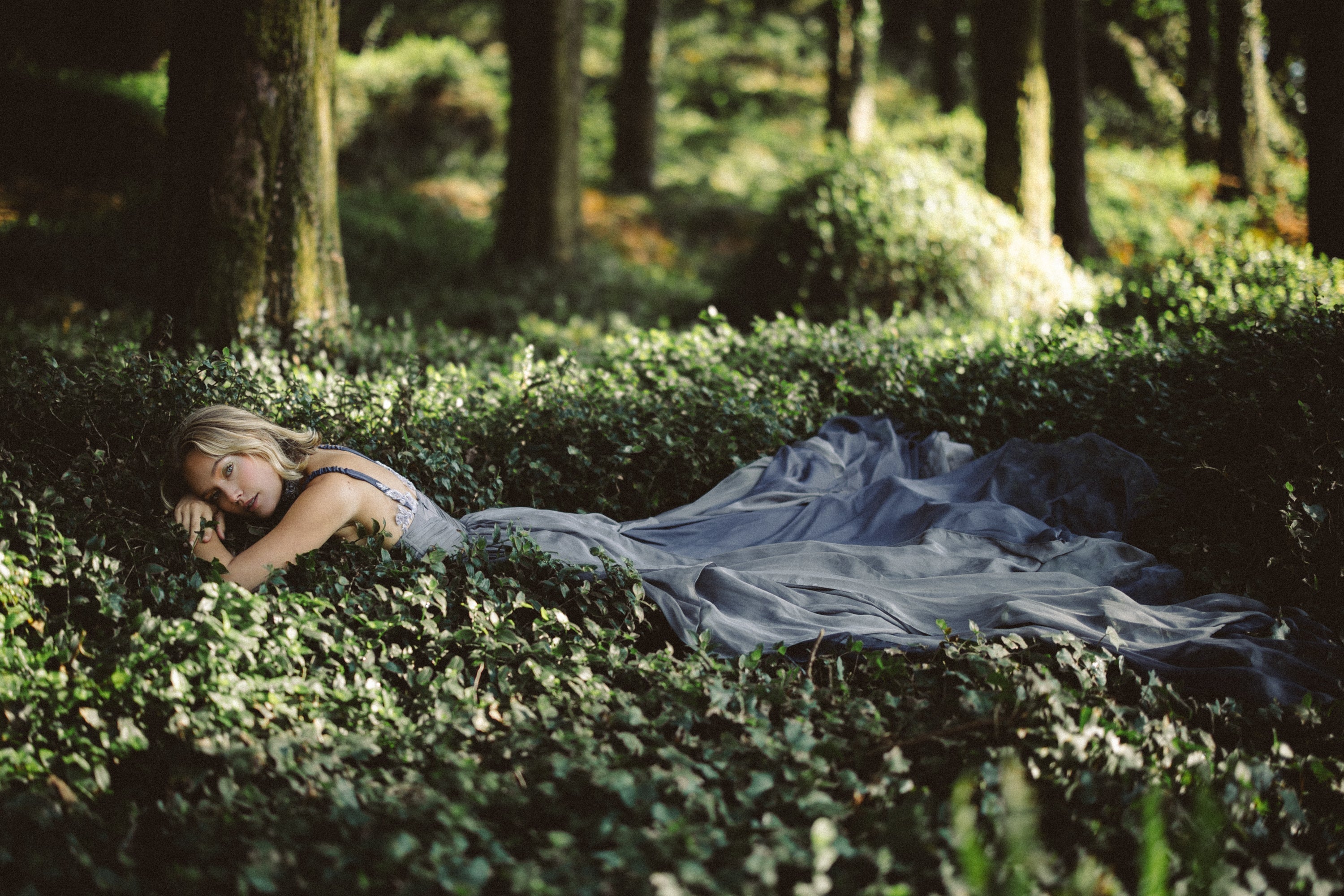
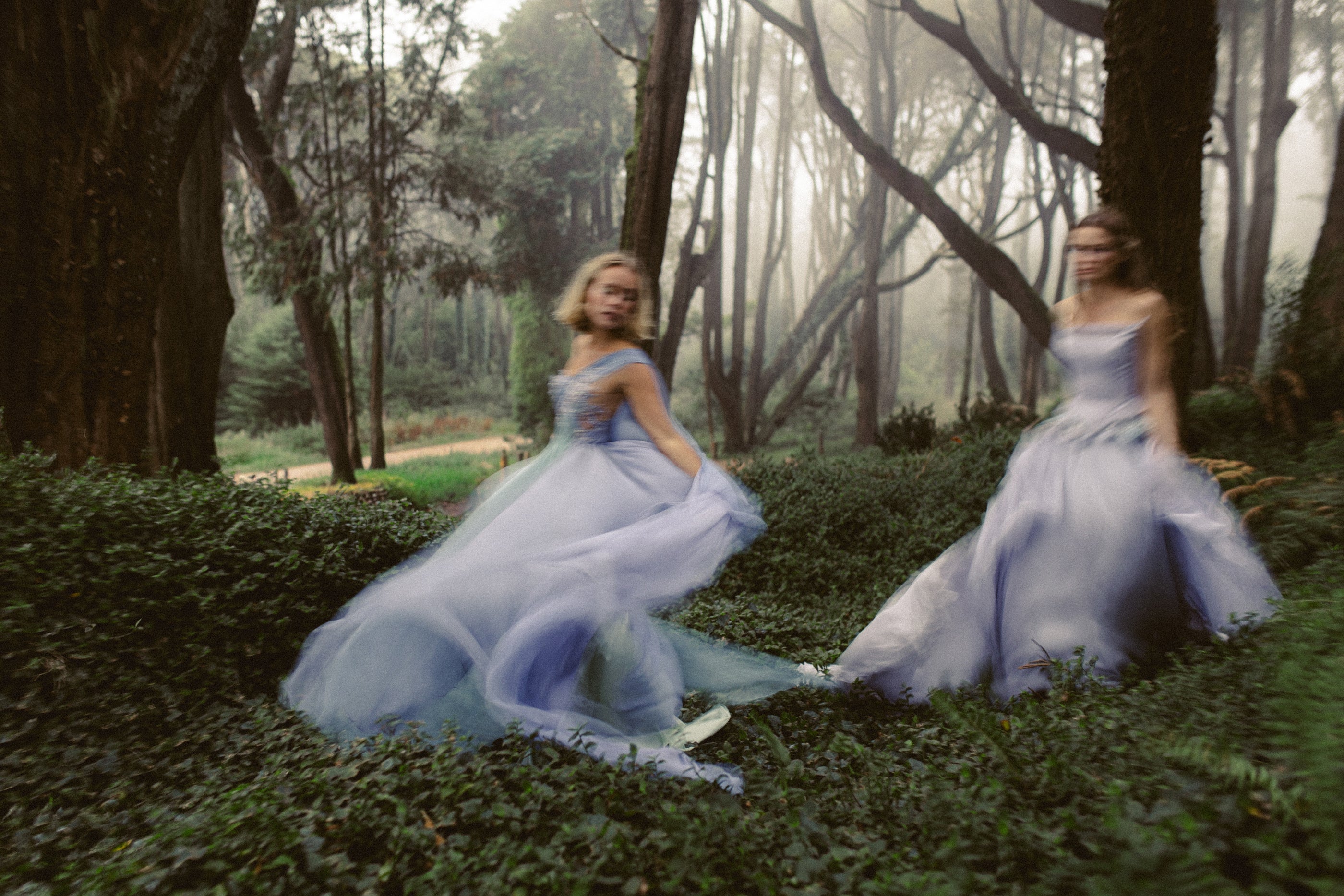
- The forest — among redwoods, in a Welsh oak grove, in an Icelandic black-sand valley. The most dramatic bohemian setting, particularly suited to gowns in dove grey, dusty lavender, sage, or storm grey.
- The garden — a private estate garden, a botanical garden, a family backyard with mature trees. The most universally bohemian venue.
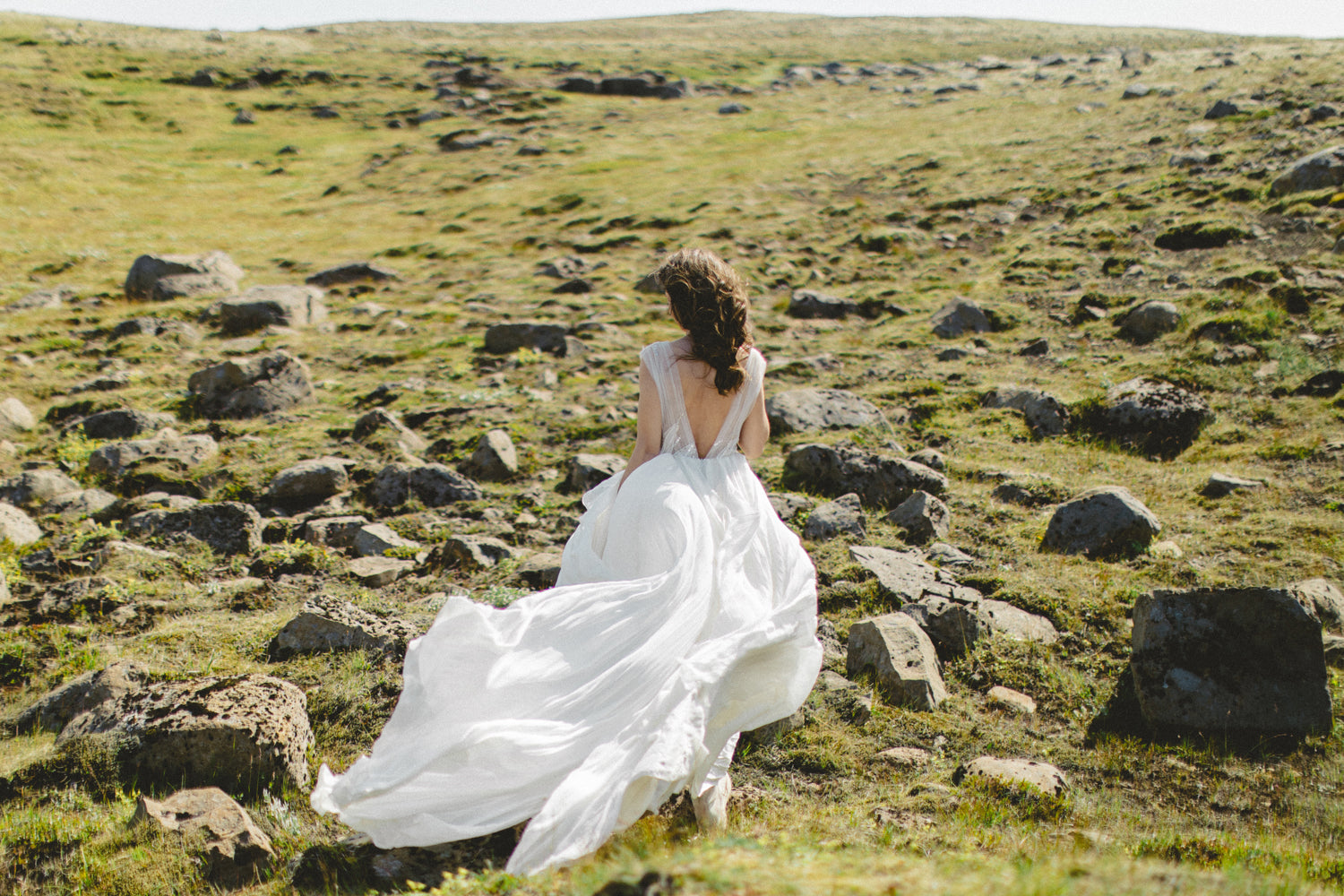
- The meadow — a wildflower field, a vineyard, an open countryside in late summer. Particularly photogenic in soft natural light.
- The beach — particularly intimate, small-guest weddings on remote beaches. Slip and sheath silhouettes work best here.
- The barn or rustic venue — for weddings that want bohemian texture with the practical benefit of a roof.
- The destination — a Roman villa, a Tuscan farmhouse, an Icelandic cabin, a Provençal mas. The bohemian bride travels well.
- The minimalist city venue — a loft, a museum, a rooftop. Particularly suited to slip dresses and the more modern bohemian silhouettes.
Each setting suggests slightly different gown choices — our complete bohemian wedding dress guide includes a venue-to-silhouette table that walks through the matches in detail.
The bohemian bridal photograph
The aesthetic of bohemian bridal photography is consistent and recognizable: natural light, soft tones, asymmetric composition, more landscape than portrait, more candid than posed. Photographers who specialize in this style tend to share a few characteristics:
- They shoot mostly in natural light, often at golden hour and blue hour
- They prefer film or film-emulating digital, with soft, warm, slightly desaturated tones
- They include the landscape in many shots — the bride is one part of a larger frame, not the whole frame
- They favour candid moments over posed shots
- They are willing to walk a long way for the right setting
If you are still choosing your photographer, look at their portfolio in the actual season and venue type you will be marrying in. Bohemian aesthetics translate differently in spring meadows, autumn forests, and winter coastlines — and a photographer who specializes in one may not capture another with the same care.
The colour palette

The 2026 bohemian bridal palette has expanded well beyond pure white. The colours that recur most often in the Mýwony atelier and across the wider couture-bohemian aesthetic:
- Warm ivory — the most universally flattering, slightly warmer than optical white
- Champagne — slightly golden, particularly flattering on warm-toned skin (the Danu from our 2024 collection)
- Light grey and dove grey — quietly sophisticated, beautiful in winter and forest weddings (the Rhiannon in light grey, the Elystra in dove grey)
- Storm grey and blue-grey — dramatic and contemporary (the Vea in storm-grey shades, the Sironna in blue-grey)
- Dusty lavender — one of the most distinctive 2026 bohemian shades (the Silynne and Faelynne from Spells of the Whispering Forest)
- Sage green — particularly suited to forest, garden, and outdoor venues (the Miryelle)
- Black — for the bride who has always known her colour (the Maeve)
For more on the 2026 trend toward colour beyond ivory, see our 2026 wedding dress trend report.
The fittings — what to know before your first appointment
The bohemian bride's first fitting is the moment when everything we have discussed becomes real — the silhouette, the fabric, the lace placement, the colour. Three things matter most:
- Take your measurements first. Even if you are unsure which gown you will choose, having accurate measurements ready will save you hours of appointment time. Our measurement guide walks through all 21 readings the Mýwony atelier uses.
- Wear the underwear you plan to wear under the gown. Bust and bodice measurements change meaningfully depending on the bra. If your gown will have a built-in bodice and no separate bra, measure without one.
- Bring images of the wedding setting itself. The atelier team should know what light the gown will be photographed in, what kind of ground you will be walking on, and what the temperature is likely to be on the day. The gown design and any custom adjustments depend on this context.
Mýwony made-to-measure gowns typically take eight to twelve weeks to construct, with two to three fittings during that time. Allow six to nine months between ordering and the wedding day.
Frequently asked questions
What is a bohemian bride?
A bohemian bride is a bride whose aesthetic prioritizes naturalism, individuality, and hand-work over conventional formality. She tends to favour relaxed silhouettes (A-line, slip, empire, two-piece, tiered), natural fabrics (silk, fine lace, soft tulle, cotton voile), and outdoor or destination venues. The 2026 bohemian bride is a more refined and couture-leaning version of the 2010s festival bride — she still loves the freedom and the naturalism, but in silk and hand-applied lace rather than fringe and feathers.
What does a bohemian bride wear?
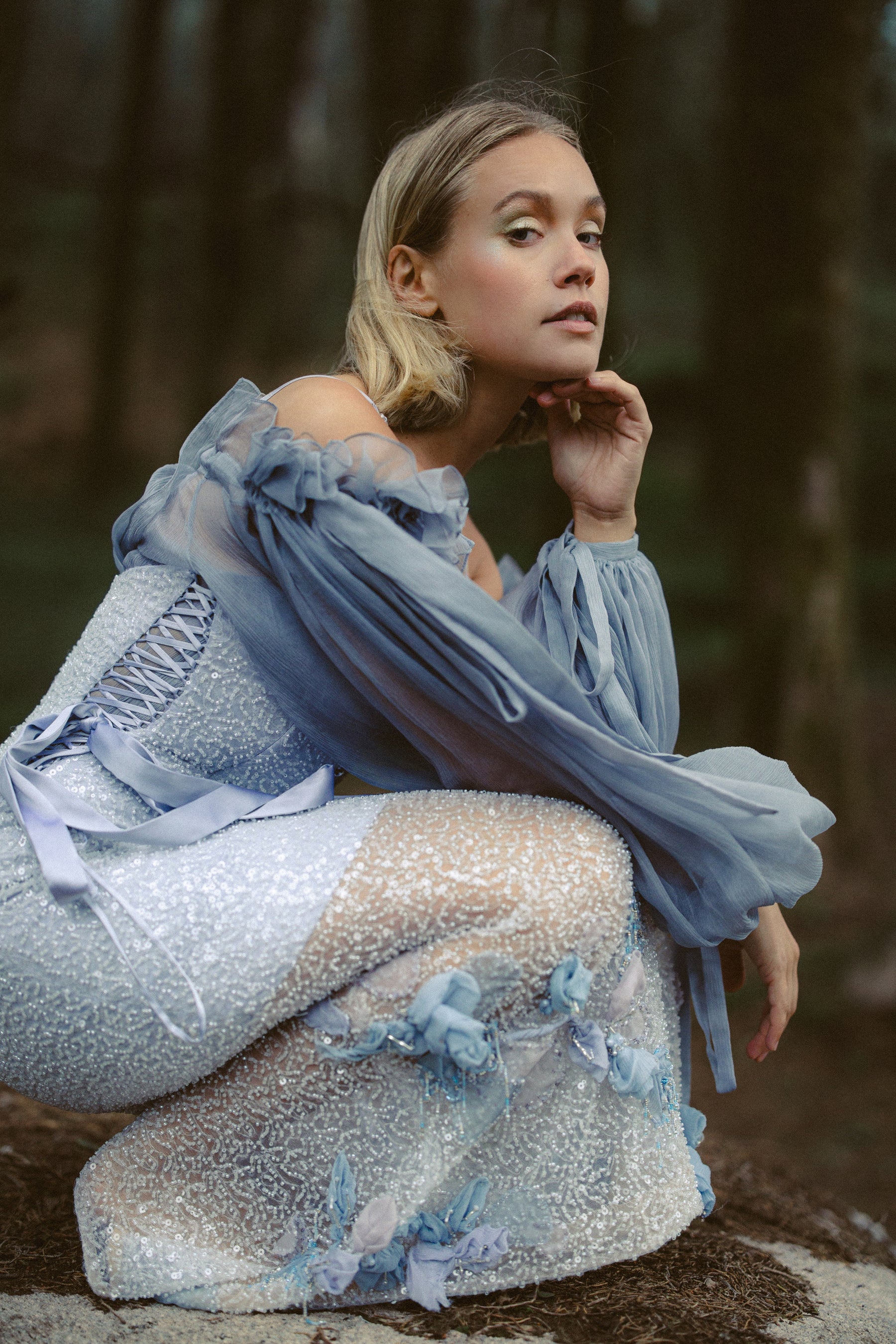
A bohemian wedding dress: typically an A-line, slip, sheath, empire, two-piece, or corset gown in natural silk or fine lace, with hand-applied detail. Long bell sleeves, off-shoulder necklines, illusion backs, and three-dimensional floral appliqué are common signatures. The colour palette has broadened in 2026 from pure white to include warm ivory, champagne, dove grey, storm grey, dusty lavender, and sage green. Veils are often replaced or supplemented with floral crowns, ribbons, or capes.
How do I plan a bohemian wedding?
The most successful bohemian weddings start with the venue rather than the dress. Choose a setting that feels like you (forest, meadow, garden, beach, destination) and let the rest of the wedding follow that setting's mood. The dress, the bouquet, the colour palette, the food, the music, and the guest list will all be easier to choose once the venue is set. The Mýwony atelier specializes in the dress; for venue, planning, and execution, working with a planner who has bohemian-specific experience is usually worth the investment.
What kind of hair suits a bohemian bride?
Loose, textured, and softly dimensional. The most successful bohemian bridal hair styles are loose beachy waves, a side-swept waterfall braid, a low twisted bun with pieces falling free, a soft half-up, or a long single braid threaded with small flowers. Avoid highly structured updos and elaborate curls; the hair should feel like a natural extension of the bride rather than a styled set piece.
Do bohemian brides wear veils?
Often yes — a long, fine cathedral veil in plain tulle is one of the most photographed bohemian pairings. But the bohemian bride is just as likely to wear a scattered floral veil, a coloured veil, a long ribbon, a fresh-flower crown, or no veil at all. The Mýwony Blooming Veil with hand-applied silk flowers and the Vea Veil in blue-grey are two couture alternatives to the classical white tulle veil.
What flowers does a bohemian bride carry?
Loose, organic, asymmetrical bouquets are most distinctly bohemian. Wild meadow bouquets with trailing greenery, single-flower clusters in soft tones, herbal bouquets with rosemary or lavender, or dried-and-fresh combinations all read as bohemian. The colours that recur most: soft ivory, blush, dusty pink, dusty lavender, sage, terracotta, and dried tones. Pure-white tightly-packed bouquets read more traditionally formal.
What shoes does a bohemian bride wear?
Many bohemian brides marry barefoot, particularly for garden, beach, forest, and backyard ceremonies. If shoes are wanted, simple leather or suede flats, low block heels (up to 5 cm), lace-up sandals, or embroidered mules are the most successful options. Avoid very high stilettos, sculpted high-fashion heels, or glittered satin shoes.
What jewellery does a bohemian bride wear?
Lean quieter than you think you should. A single pair of pearl or drop earrings, a fine layered chain, a single statement ring, or no jewellery at all is usually the most elegant choice. If your gown already carries embroidery, beading, or hand-applied lace, the jewellery should be the lightest possible accent. Heavy crystal bridal sets tend to compete with the gown's own craft and date wedding photography quickly.
What does a couture bohemian wedding dress cost?
Couture bohemian wedding dresses sit at the higher end of bridal pricing because of the labour involved — pattern drafting, hand-application of lace, hand-stitched silk flowers, internal corsetry, and multiple fittings. Expect couture bohemian gowns from approximately $3,500 to $7,800 in natural silk with hand-worked detailing. Mýwony gowns from Spells of the Whispering Forest and the wider archive sit in this range.
How long before my wedding should I order a bohemian wedding dress?
For a couture made-to-measure bohemian gown, allow a minimum of six months between ordering and wedding day, and ideally nine to twelve months. Hand-applied lace, hand-stitched silk flowers, and fittings (typically two to three over eight to twelve weeks of construction) all take time. The atelier calendar fills fastest in late spring and early autumn.
Beginning your bohemian bride journey
If the bohemian bride is who you imagine yourself as, the next step is to see the gowns themselves. Our current couture collection, Spells of the Whispering Forest, is built entirely around the modern bohemian bride — each gown named for a moment in nature, cut in natural silk and hand-applied lace, available in dusty lavender, dove grey, storm grey, sage green, and ivory. The full archive lives in our Mýwony bridal collection; the 2024 collection remains in production for brides who prefer those particular gowns.
To go deeper on any particular topic, the Mýwony cluster covers each in detail:
- The Ultimate Guide to Bohemian Wedding Dresses — the silhouettes, fabrics, and details
- Bohemian Lace Wedding Dresses — the lookbook of nine Mýwony lace gowns
- Corset Wedding Dresses — the structural-romantic version of bohemian bridal
- Wedding Dress Styles Chart — every silhouette explained
- Wedding Dress Styles for Your Body Type — the body-by-body guide
- 2026 Wedding Dress Trends — the season's defining shifts
- How to Take Your Measurements — the practical first step
And when you are ready, we would be glad to begin a conversation about the gown that belongs to your day.