
The Ultimate Guide to Bohemian Wedding Dresses
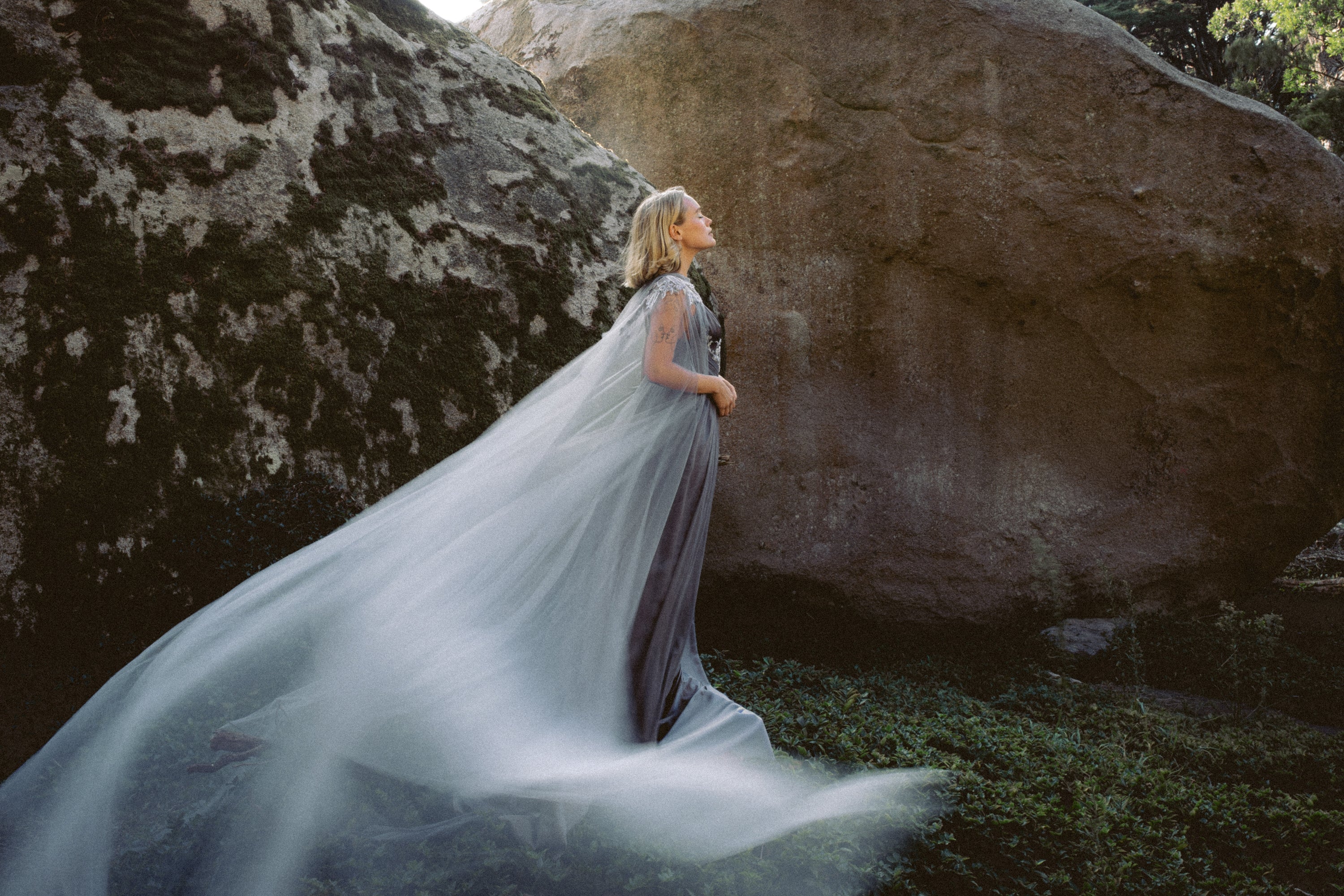
A bohemian wedding dress is not a silhouette. It is a feeling — of wildflowers pressed between pages, of a cathedral of redwoods, of sunlight filtered through muslin and lace. It is a way of dressing that trades the formality of tradition for something softer, more personal, and unmistakably you.
This guide is written for the bride who wants her gown to feel as much a part of her story as the vows themselves. Over the next several thousand words, you will find a full portrait of the modern bohemian bridal gown — where the style began, how to recognize it, which silhouettes and fabrics define it, and how to choose the dress that belongs to your particular day. By the end, you will have the language to describe exactly what you are looking for, whether you are beginning your search or standing in front of a mirror in your first fitting.
What makes a wedding dress “bohemian”?
The bohemian bridal aesthetic grew from the same cultural impulse as the bohemian movement itself: a gentle refusal of the expected, in favor of the handmade, the natural, and the freely imagined. Where a traditional ball gown announces ceremony with every layer of organza, a bohemian gown whispers. Its hallmarks are softness of line, fluidity of fabric, delicacy of detail, and an unmistakable sense of ease.
In the simplest terms, a bohemian wedding dress is a gown that prioritizes movement over structure, texture over shine, and individuality over convention. It may be cut as an A-line, a sheath, an empire, or a two-piece. It may be dressed in hand-worked lace, silk georgette, soft tulle, or lightweight cotton. What unites every bohemian gown is a feeling: that the bride wearing it is entirely, unmistakably herself.
The core characteristics
- Natural, flowing fabrics that move with the body rather than sculpt around it — silk, chiffon, georgette, tulle, and soft lace
- Hand-worked or artisanal detailing — floral appliqué, botanical embroidery, crochet, macramé, or beadwork that tells a quiet story up close
- A relaxed silhouette that feels lived-in rather than structured — often A-line, slip, empire, or sheath
- Openness: long bell sleeves, off-shoulder necklines, low or illusion backs, sheer panels, and plunging V-necks that feel romantic without feeling formal
- A palette that leans away from pure stark white — soft ivory, champagne, blush, oatmeal, and the occasional black or deep color
- An unmistakable sense of place: a bohemian gown feels most at home outdoors, whether beneath a canopy of trees, on a windy cliff, or barefoot in the sand
The modern bohemian bride
The bohemian aesthetic has evolved dramatically in the past decade. Where the 2010s bohemian bride often leaned toward the folk-festival — fringed sleeves, feathered crowns, turquoise — today’s bohemian bride has grown more refined, more selective, and more quietly luxurious. She still loves the freedom and the naturalism; she has simply traded the costume for the couture.

She is the bride who chooses her wedding location first and her dress second, and who would rather hear her guests describe her gown as “so her” than “so beautiful.” She is drawn to small-batch designers, vintage fabrics, and gowns with a story. She wants the dress to let her dance at the reception and walk barefoot through the grass without a second thought. She is as likely to wed in a meadow in Provence as in a minimalist loft in Brooklyn, and her gown will speak the language of both.
A bohemian gown is not an escape from elegance. It is a different definition of it — elegance that favors the organic, the intimate, and the honest.
Iconic silhouettes of bohemian bridal design
Every bohemian gown is, at heart, one of a handful of silhouettes rendered in a soft, poetic way. Understanding these shapes is the first step toward finding yours. The differences are not cosmetic — each cut moves, photographs, and feels distinct on the body.
The ethereal A-line
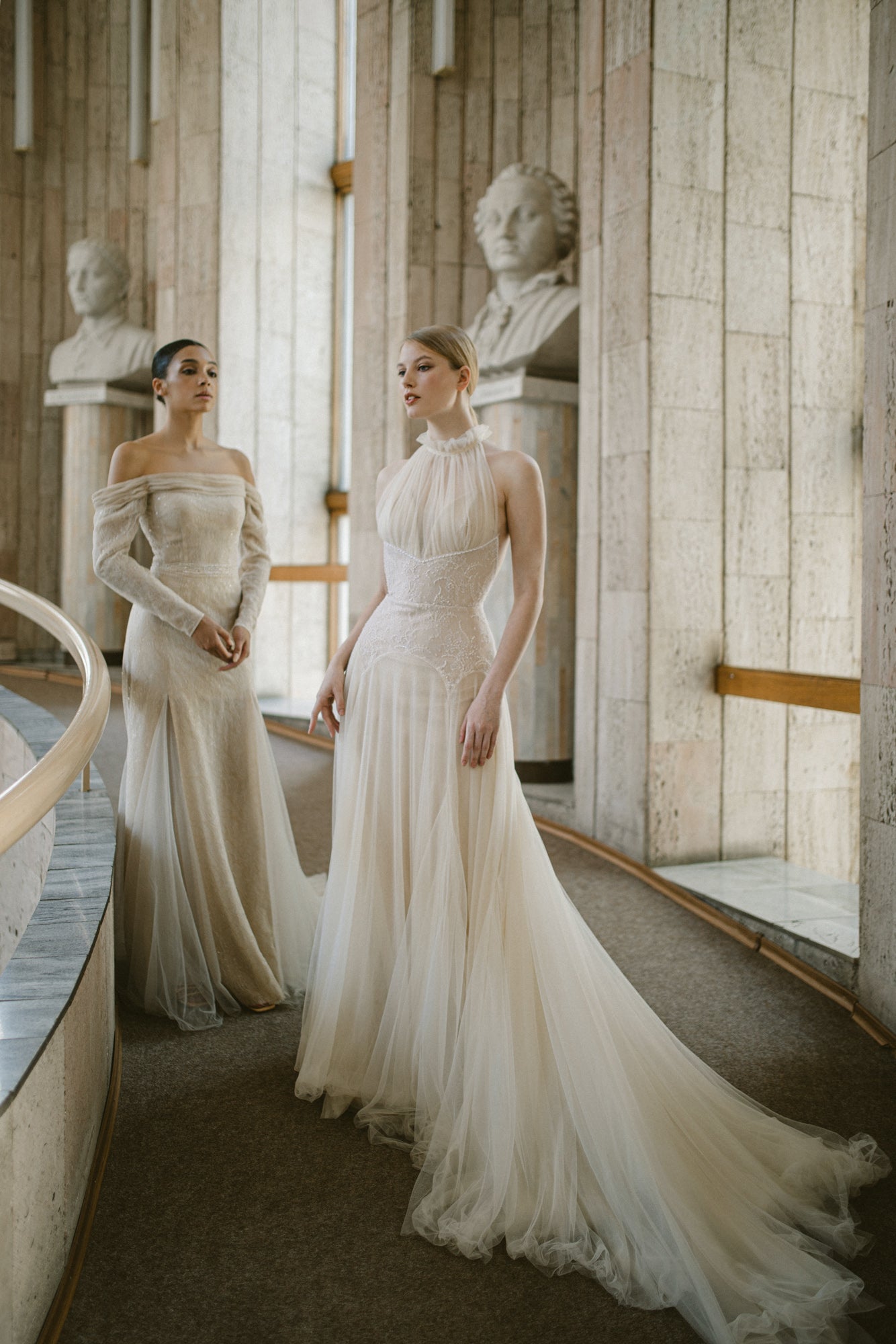
The A-line is the most beloved shape in bohemian bridal design, and for good reason. It is softly fitted through the bodice, then falls in a gentle, continuous curve to the hem, without tucks, gathers, or structural boning. Rendered in floating silk or embroidered tulle, the A-line conveys movement even in stillness. It photographs beautifully in wind, flatters almost every figure, and requires almost no architectural support — a quality bohemian brides tend to love. A-lines are especially well-suited to garden, forest, and outdoor ceremonies where a longer train can trail naturally through leaves and petals. (Our Lavinia gown is a favorite example.)
The slip and sheath
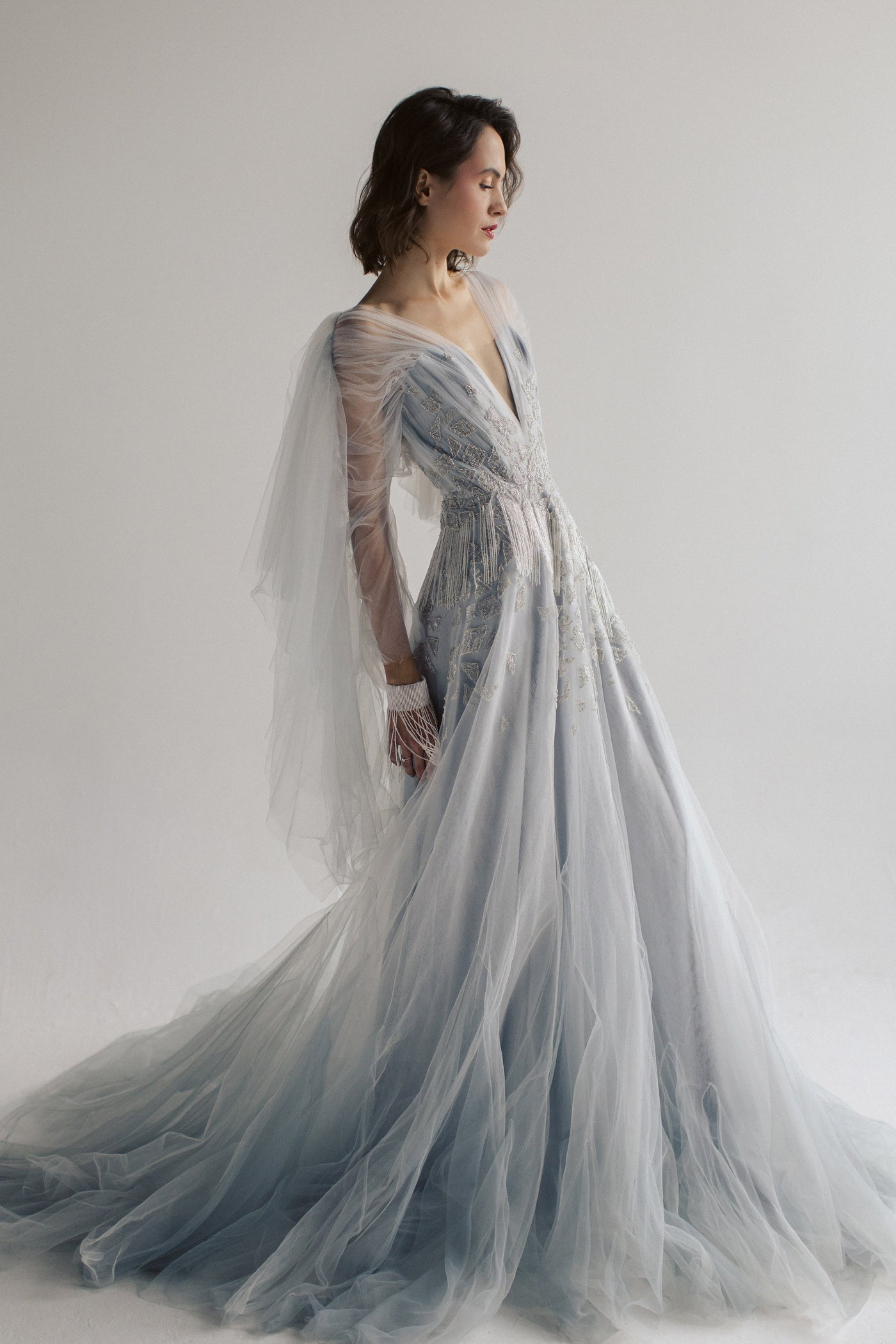
For the bride who wants something barely-there, the slip and sheath silhouettes are the most distilled form of bohemian bridal. Cut close to the body and made of liquid silk or crêpe, a slip gown is almost sculptural in its simplicity. It hides nothing and relies entirely on the fit of the fabric and the craftsmanship of the hem. A sheath extends the same logic with a slightly more structured bodice. Both are especially effective for minimalist weddings, city ceremonies, beach elopements, and second-look reception dresses — see the Rhiannon for the slip silhouette we return to again and again.
The empire and grecian

An empire waist sits just below the bust, releasing the fabric into a gentle fall through the skirt. It is the most forgiving and the most romantic of bohemian silhouettes, with a heritage that reaches back to Regency-era gowns and ancient Greek draping. A grecian variation adds soft pleats or an asymmetrical shoulder, often in chiffon or silk georgette. Both read as effortlessly feminine and are particularly lovely for destination weddings and warmer months — our Titania is cut in this spirit.
Tiered and layered skirts
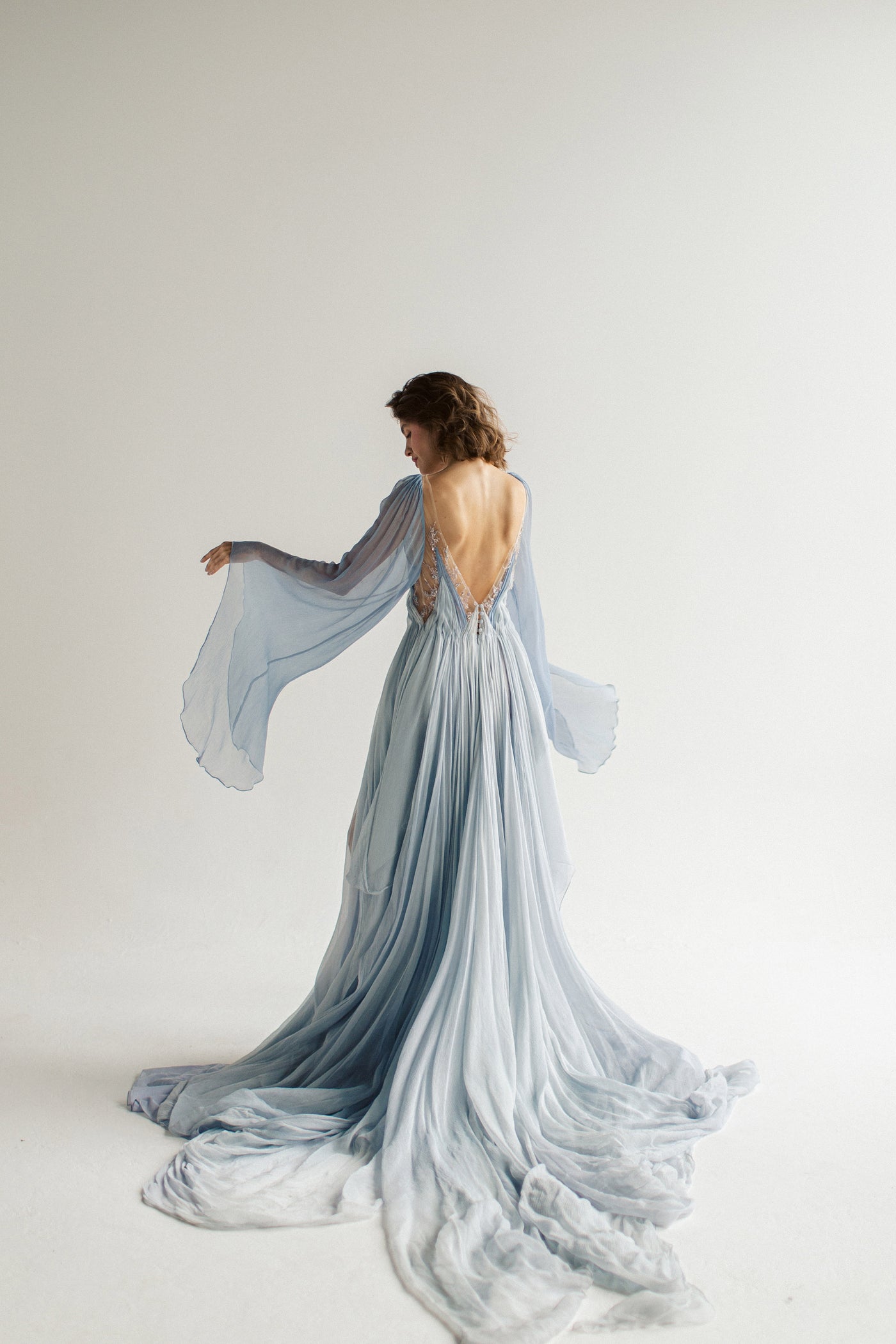
Tiered skirts bring the textural storytelling of bohemian design to its fullest voice. Layers of tulle, gathered cotton, or handkerchief-cut lace create volume without weight and produce the kind of movement that makes a first dance unforgettable. A tiered bohemian dress is best paired with a more restrained bodice — a simple bandeau, an open back, or a delicate lace sleeve — so that the skirt has room to speak. The Sironna is our signature take on this silhouette.
Two-piece and convertible
Two-piece bridal sets offer the ultimate in personalization: a fitted or lace top paired with a distinct skirt, often with the option to mix, match, or change throughout the day. They speak directly to the bohemian love of individuality and are a favorite among brides planning multi-day weddings, reception changes, or simply wanting a look that feels different from tradition. Convertible gowns — those with detachable skirts, removable sleeves, or reversible panels — extend the same idea.
The fabrics that define the bohemian feel
If silhouette is the architecture of a bohemian gown, fabric is its soul. A bohemian wedding dress almost always uses natural-fiber or natural-feeling textiles that move, breathe, and soften with wear. The right fabric is what makes the dress feel less like a costume and more like an extension of the bride.

Lace — whisper-thin and hand-worked
Lace is the most iconic bohemian fabric, but not all laces are equal. The laces that suit a bohemian gown are almost always soft, organic, and botanical — think Chantilly with trailing florals, hand-cut Alençon with three-dimensional petals, or handmade guipure in linen and cotton. The feeling should be of something found in a grandmother’s trunk, not of something machine-made. The finest bohemian lace reveals more the closer you stand to it — you will find it throughout our Living Art collection.
Silk and silk georgette
Silk — specifically the softer, more drape-friendly silks like silk crêpe de chine, silk georgette, and sand-washed silk charmeuse — is the fabric of choice for slip dresses, A-lines, and empire gowns. It has a natural dullness that catches light without reflecting it the way a shinier fabric would, so it reads as quiet luxury rather than formal glamour.
Tulle and soft mesh
Bohemian tulle is not the stiff, architectural tulle of a classic ball gown. It is a gossamer-light, often English or French, tulle that falls in cloud-like folds. Used for skirts, overlays, and illusion necklines, tulle gives a bohemian gown its romantic dreaminess. Mesh — lighter and slightly more transparent — performs a similar role and is especially effective for illusion backs and long, unlined sleeves.
Cotton and linen
Micro-weddings and destination ceremonies have brought cotton and linen back into bridal. A structured cotton voile or a finely woven linen can make an exquisite bohemian gown, particularly for beach, garden, and courthouse ceremonies. These fabrics are humble by bridal standards, which is exactly their charm — they speak the language of real life.
A note on sustainability. Many bohemian brides are quietly choosing gowns made from natural fibers precisely because of what those fibers are not: polyester, nylon, and heavy synthetic blends. Natural-fiber gowns also tend to age better, take alterations more gracefully, and feel better to wear for a long wedding day. When you are choosing your dress, ask your designer about the fabric origin and composition — it is one of the most honest markers of a well-made bohemian gown.
Signature details — where the soul of a bohemian gown lives
A well-designed bohemian gown is almost always made distinctive by a handful of carefully chosen details. These are the elements photographers linger on, and the elements guests remember in the weeks afterward. They are also the decisions most worth making slowly.
Sleeves — long bell, puff, cap, and bare
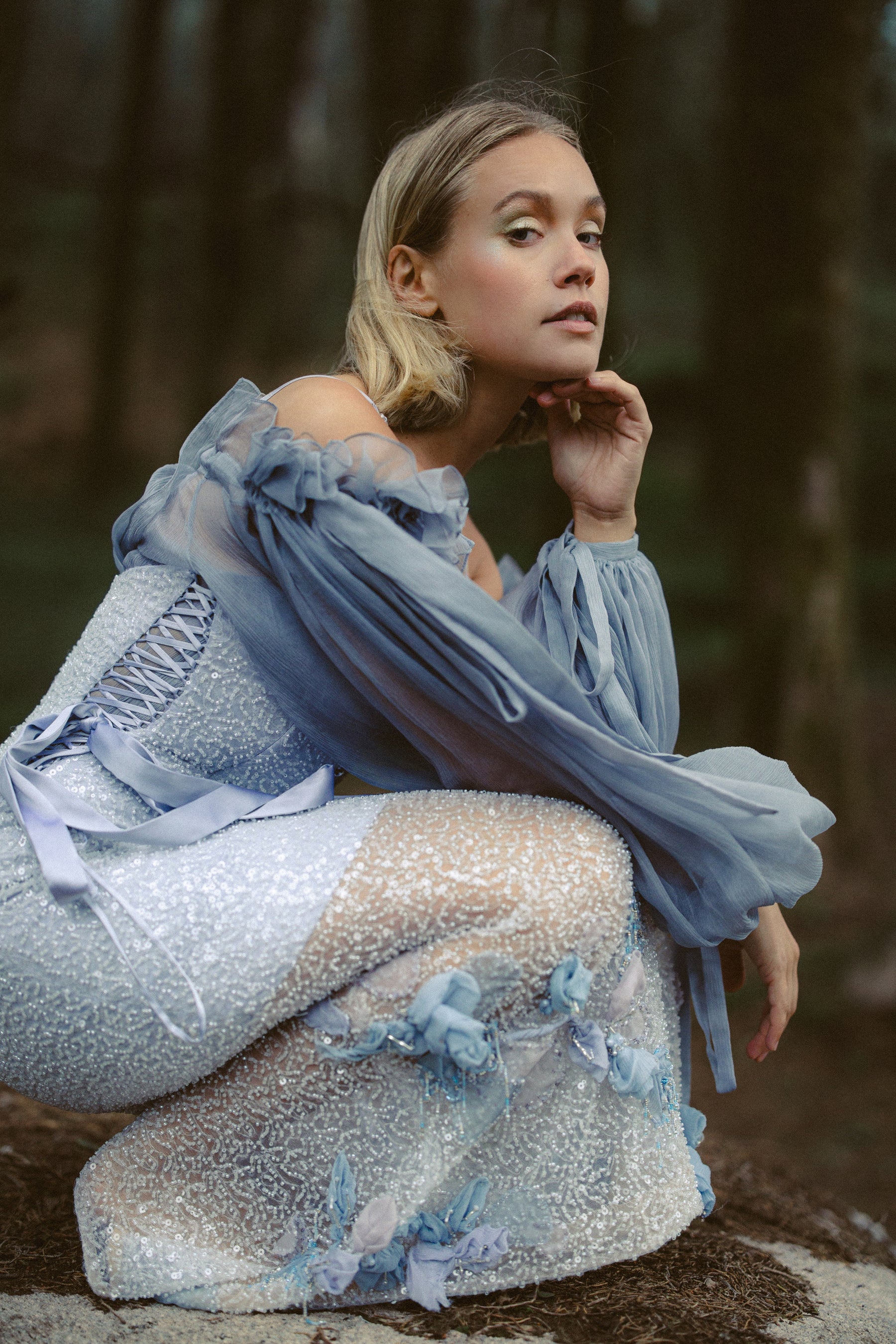
Sleeves are one of the clearest signatures of a bohemian gown. A long bell sleeve in soft lace evokes the 1970s bohemian canon; a full puff sleeve in cotton voile feels pastoral and contemporary; a delicate cap or off-shoulder sleeve balances romance and skin. Going fully bare-shouldered, with a corset or bandeau bodice, is equally bohemian in spirit — particularly in warmer months.
Necklines — V, square, and illusion
The most distinctly bohemian necklines are those that feel softly geometric rather than strictly symmetrical. A deep V-neck in lace, a square neckline cut at a relaxed height, or an illusion neckline embroidered with scattered florals are all ways of echoing the open-handed character of the style.
Backs — low, laced, and illusion
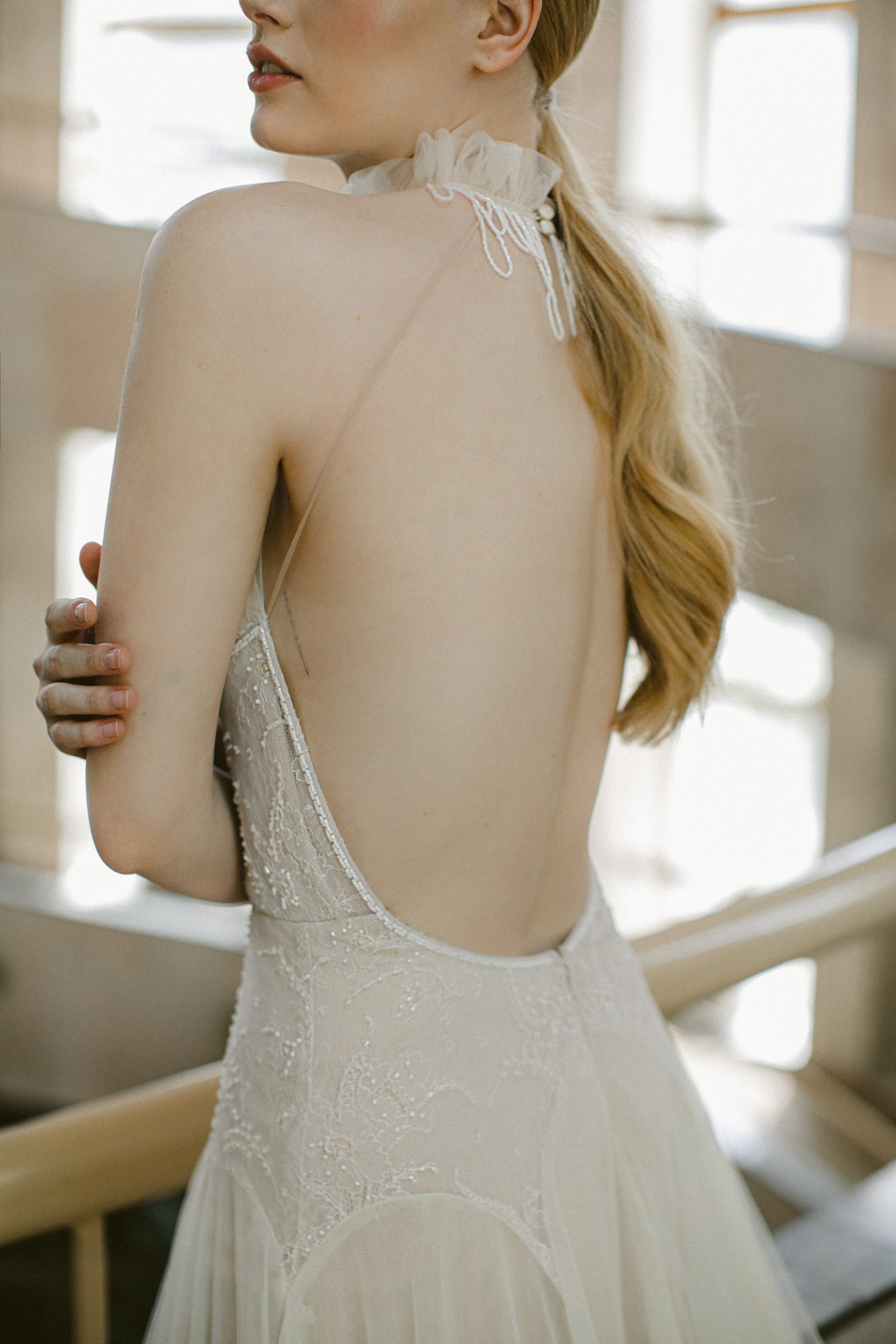
The back of a bohemian gown is often its most celebrated view. A low scoop back, a laced-up corset back, a plunging V, or an illusion panel covered in embroidery makes the walk back up the aisle as photographed as the walk down. This is a detail worth spending time on.
Embroidery and appliqué — a story in thread
The finest bohemian gowns wear their craft openly. Hand-embroidered vines, botanical appliqués, scattered 3D flowers, delicate beadwork, and micro-pearl detailing all belong here. Think of this as the jewelry that is stitched directly onto the gown — and resist the temptation to add layers of conventional accessories on top of it.
Styling your bohemian bridal look
The bohemian bride, perhaps more than any other, has to make careful choices about styling. The gown does much of the work; the temptation to over-decorate should be gently resisted. Below is a short guide to the accessories and finishing choices that tend to work best.
Veils — or their beautiful alternatives

A cathedral-length single-layer veil made of fine tulle is the most traditional pairing, and it remains a quietly stunning choice for a bohemian gown, especially in photographs. But a bohemian bride is just as likely to choose a floor-length fingertip veil scattered with embroidered florals (our Midnight Raindrops veil is a lovely example), a long ribbon, a crown of wildflowers, or nothing at all. Trust your instinct — if the gown is doing enough, the veil can be small or absent.
Hair, flowers, and crowns
Hair for a bohemian bride tends to be loose, textured, and softly dimensional — a waterfall braid, beachy waves, a low twisted bun with pieces falling free. A crown of small blooms (baby’s breath, ranunculus, sweetpeas, seasonal wildflowers) works better than a heavy tiara. A single tucked flower, a fabric ribbon, or a vintage comb can be equally effective.
Jewelry
Lean quieter than you think you should. Layered fine chains, a single statement ring, a pair of simple pearl or fresh-water hoop earrings, or even no jewelry at all is often the most elegant choice. If your gown already carries embroidery or beading, your jewelry should whisper.
Shoes
Bohemian brides are famously barefoot, and this is still a beautiful choice for garden, beach, and backyard ceremonies. If you want shoes, consider simple leather or suede flats, low block heels, lace-up sandals, or embroidered mules. Very high stilettos rarely feel right with this aesthetic.
Choosing the right bohemian dress for your venue

Every bohemian gown is a gown for a place. The setting of your ceremony should guide silhouette, fabric, and length as much as your personal taste does. Here is how to think about the match.
| Venue | Best silhouette | Best fabric | Length |
|---|---|---|---|
| Garden or meadow | A-line, empire, tiered skirt | Soft tulle, silk, cotton voile | Chapel to sweep |
| Beach or seaside | Slip, sheath, grecian | Silk georgette, chiffon, linen | Ankle to floor |
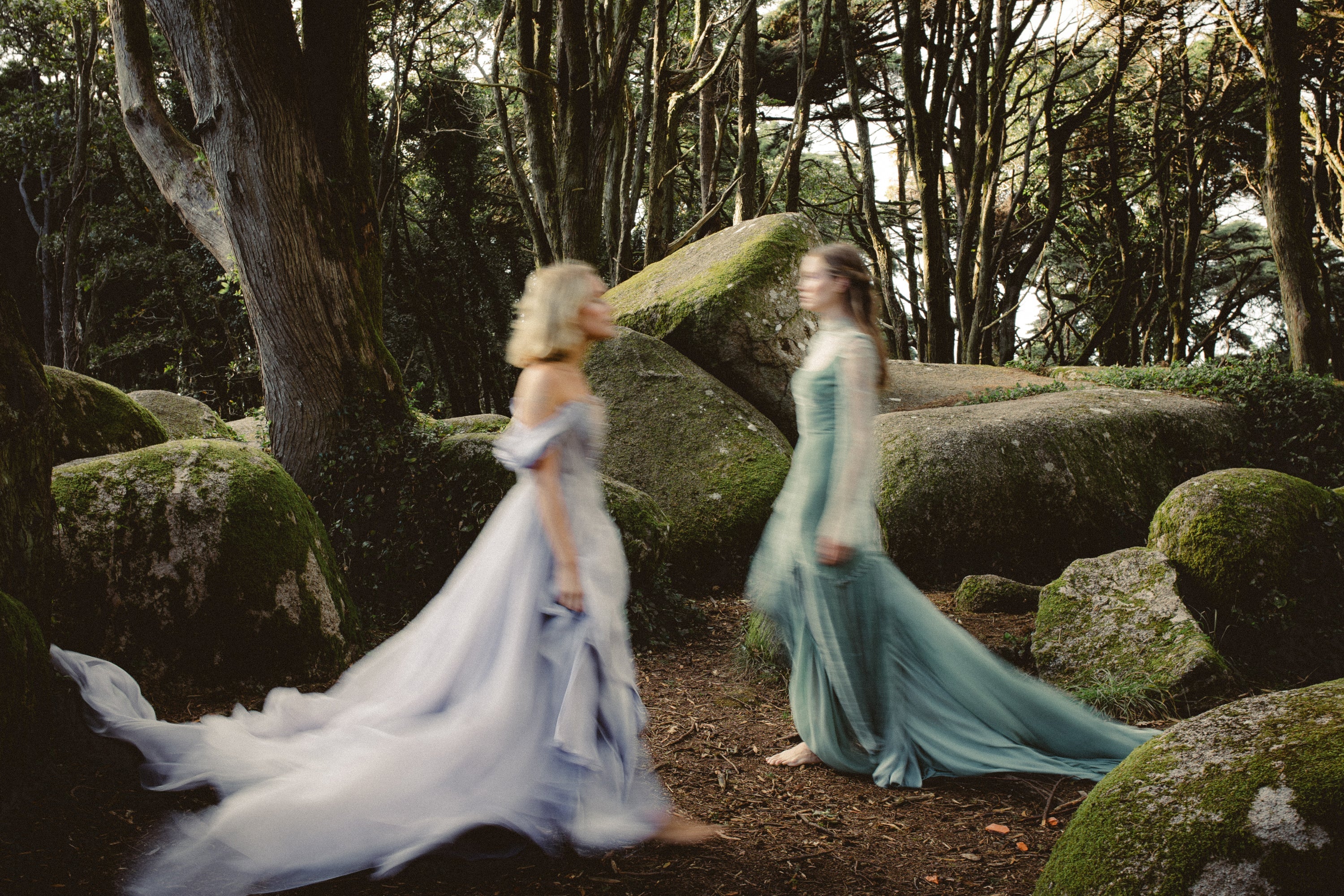
| Forest or woodland | A-line, tiered, empire | Lace, embroidered tulle | Chapel to cathedral |
| Barn or rustic | A-line, two-piece, tiered | Cotton, lace, raw silk | Floor to chapel |
| City or minimalist | Slip, sheath, A-line | Crêpe, silk, fine lace | Floor or tea |
| Destination / elopement | Slip, two-piece, convertible | Silk, linen, cotton voile | Tea to floor |
These are guidelines, not rules. A sheath gown at a forest ceremony can be every bit as bohemian as a tiered one — it simply reads as a more modern, more minimalist version of the aesthetic. If in doubt, look at the space where you will say your vows and ask yourself what silhouette moves naturally in that setting.
The Mýwony vision of bohemian bridal

At Mýwony, we have designed bohemian gowns for brides marrying in Icelandic black-sand valleys, in Roman villas, in Welsh forests, and in city halls in New York. The common thread across every dress we make is a belief that a bohemian gown should feel authored, not ornamented. Every piece is sewn in small batches by a named atelier team, in natural-fiber fabrics chosen for how they move and age. Our silhouettes favor the A-line, the slip, and the two-piece, and our hand-worked laces and florals are designed to reveal themselves to your guests only when they are standing next to you. You can explore our current 2024 collection or the full bohemian wedding dress collection whenever you are ready to begin.
We believe, deeply, that a wedding gown is most beautiful when it is the least self-conscious thing in the room. That is what we try to design for.
Frequently asked questions
What exactly defines a bohemian wedding dress?
A bohemian wedding dress is a gown whose design emphasizes natural fabrics, relaxed silhouettes, and artisanal detailing over structure and formality. The most common silhouettes are A-line, sheath, slip, and empire; the most common fabrics are soft lace, silk, silk georgette, tulle, cotton, and linen. The style prioritizes comfort, movement, and individuality, and tends to suit outdoor, destination, and intimate wedding settings.
What is the difference between boho and bohemian wedding dresses?
In everyday usage, “boho” and “bohemian” describe the same aesthetic. “Boho” is the shorthand, often used for more casual or playful variations of the style (think flower crowns and tiered cotton skirts), while “bohemian” tends to be used for the more refined, couture-leaning version. Both words describe gowns that favor softness, natural fabrics, and individual character over traditional ball-gown formality.
Are bohemian wedding dresses more affordable than traditional ones?
Not necessarily. A bohemian gown can range from an under-a-thousand-dollar cotton-and-lace dress for a beach elopement to a fully custom, hand-embroidered silk couture piece at couture prices. The factors that most influence price are the quality of the fabric, the hand-work involved (lace appliqué and embroidery are labor-intensive), and whether the gown is custom or off-the-rack. A well-made bohemian gown in natural fibers with genuine hand detailing is typically priced in the same range as an equivalently made traditional gown.
What body types look best in bohemian wedding dresses?
Because the bohemian aesthetic includes so many silhouettes — A-line, sheath, empire, tiered, two-piece — there is a flattering bohemian cut for almost every body. A-line and empire silhouettes are the most universally complementary and particularly forgiving through the midsection. Slip and sheath dresses are most flattering on long, lean, and hourglass figures, or over a well-fitted bodice. Tiered and two-piece designs work beautifully on curvier figures, giving definition at the waist. Ultimately, the bohemian style’s emphasis on softness and comfort means fit and alterations matter more than body type.
Can I wear a bohemian wedding dress to a formal venue?
Yes — especially the more refined silhouettes. A silk slip gown or a fitted A-line in fine lace reads as quietly elegant and works beautifully in formal indoor venues, ballrooms, and historic buildings. The key is to pair the gown with more structured styling: a cathedral-length veil, refined shoes, and classic hair rather than flowing waves. Avoid the most casual bohemian signatures (heavy tiering, raw hems, flower crowns) in very formal settings.
How do I know if a bohemian wedding dress is well-made?
Look first at the fabric — is it a natural fiber or a high-quality blend? Inspect the lace or embroidery up close — is it hand-applied, with three-dimensional texture, or machine-printed? Turn the gown inside out if you can, and check the seams for finished edges and reinforced stress points. A well-made bohemian gown feels soft in the hand, holds its shape without being stiff, and shows evidence of artisan craftsmanship on the inside as much as the outside.
How far in advance should I order a bohemian wedding dress?
For a made-to-measure or custom bohemian gown, allow a minimum of six months between ordering and wedding day, and ideally nine to twelve months. Hand-worked lace and embroidery, natural-fabric sourcing, and the fitting process (typically three fittings over two to three months) all take time. For off-the-rack or ready-to-wear bohemian dresses, three to four months is generally sufficient to allow for alterations. You can begin by reviewing how to take your measurements so you arrive prepared.
What accessories pair best with a bohemian wedding dress?
The most successful bohemian styling is restrained. Consider a long, scattered-floral cathedral veil or no veil at all; a crown or tucked-in fresh-flower piece in the hair; fine, layered jewelry or a single meaningful heirloom; and simple, wearable shoes (or bare feet). Avoid combining too many bold accessories — if the gown itself has lace or embroidery, let it be the statement.
Starting your bohemian journey
Choosing a bohemian wedding dress is, in its best form, a slow and personal process. Begin by gathering the images and feelings — a beach, a forest, a room full of candles — that already feel like “your” wedding. From there, the silhouette, fabric, and details of your gown should follow. If you would like to see gowns in this spirit, we would love to show you Mýwony’s collection; we design every piece for this kind of bride, and we would be honored to be part of your day.
Explore our collection of bohemian wedding dresses, learn how to take your measurements, read the stories of real Mýwony brides, or read more about our atelier. We are always glad to help you begin.