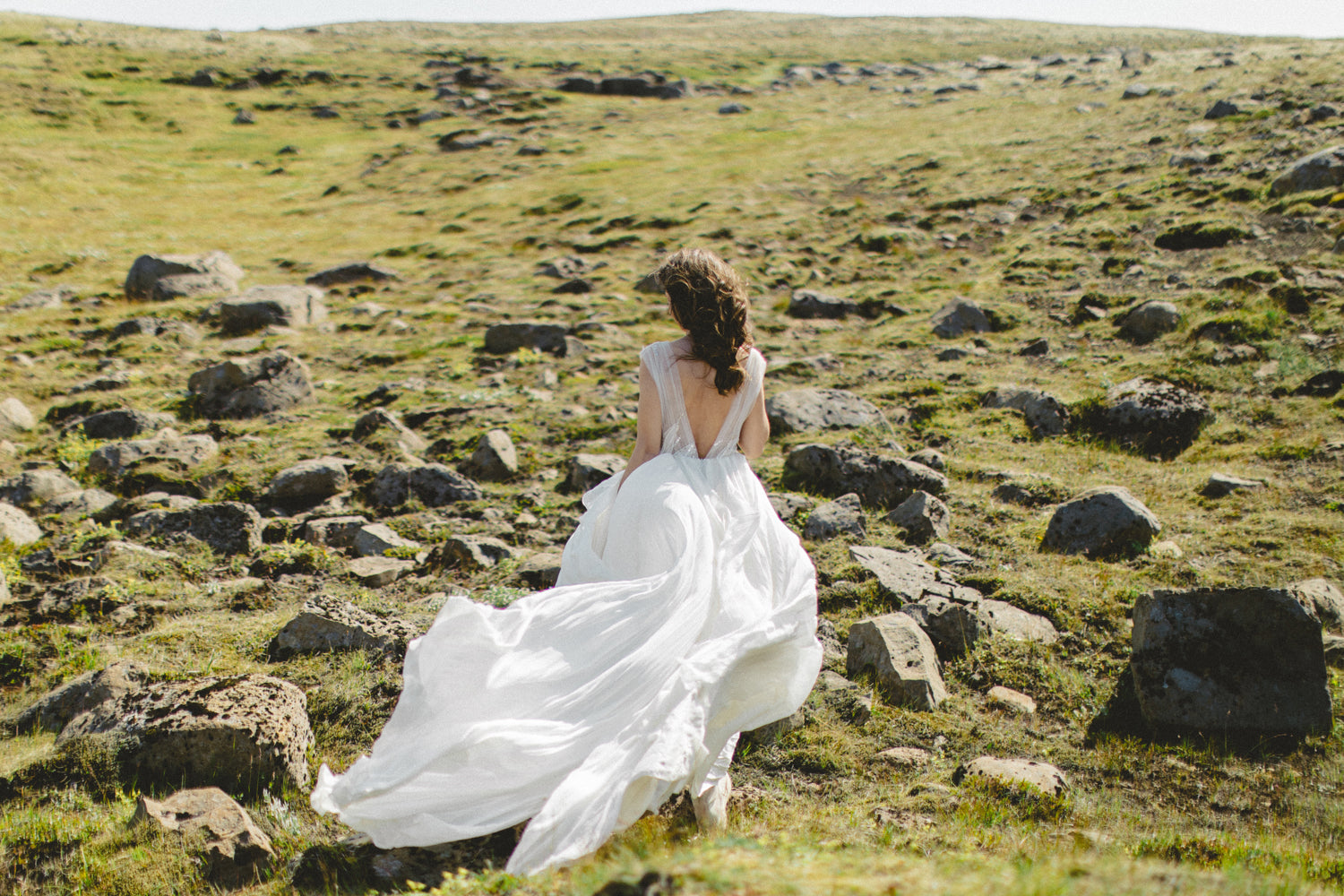

Article: Wedding Dress Styles for Your Body Type — A Complete Bridal Guide
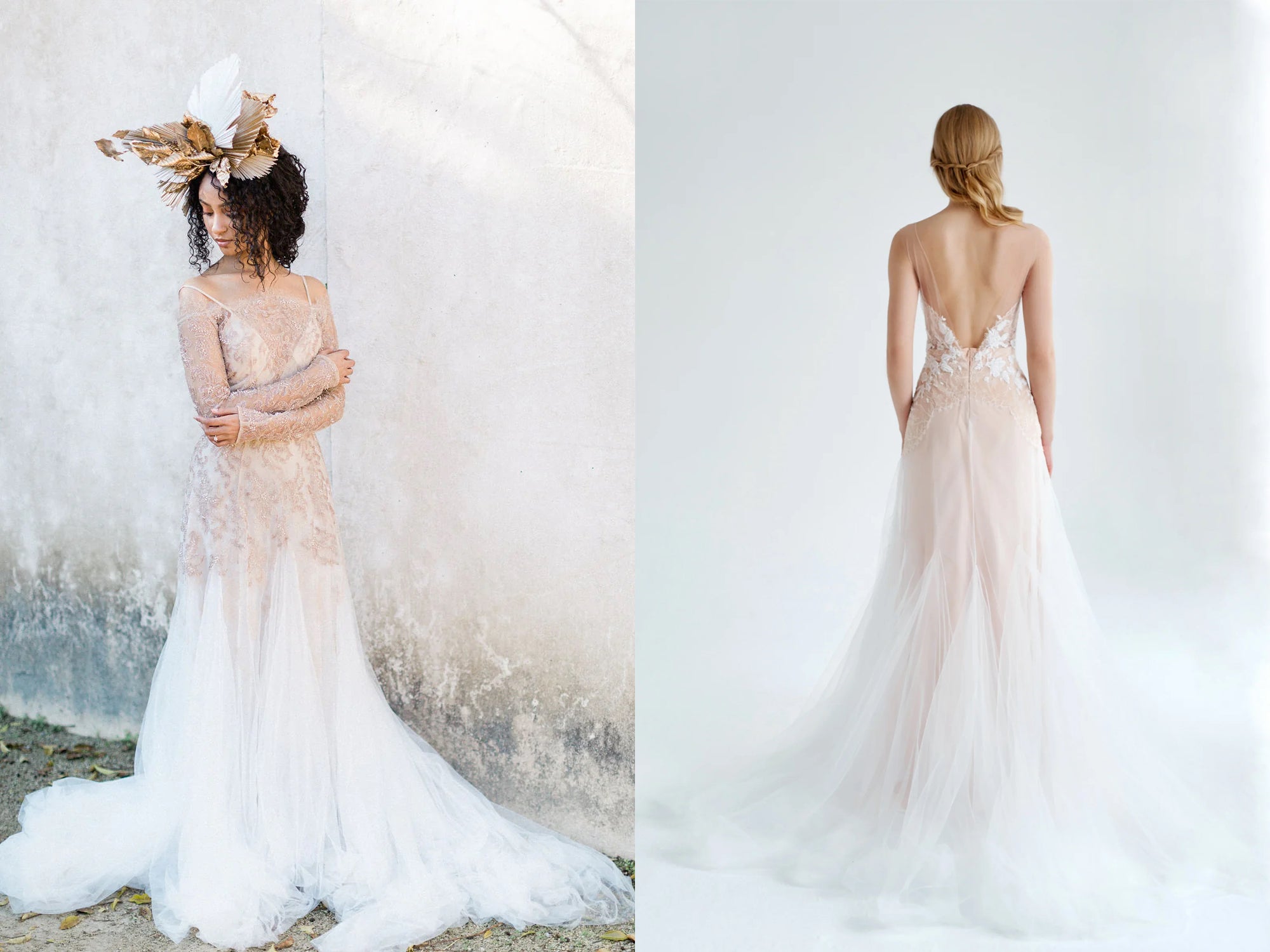
Wedding Dress Styles for Your Body Type — A Complete Bridal Guide
The most flattering wedding dress is rarely the most fashionable one. It is the one cut for your body, in a fabric that moves the way you move, with a silhouette that draws the eye exactly where you would like it to go. This guide walks through the six common body types in bridal — hourglass, pear, apple, rectangle, petite, and tall — and the silhouettes, fabrics, and Mýwony gowns that flatter each one most.
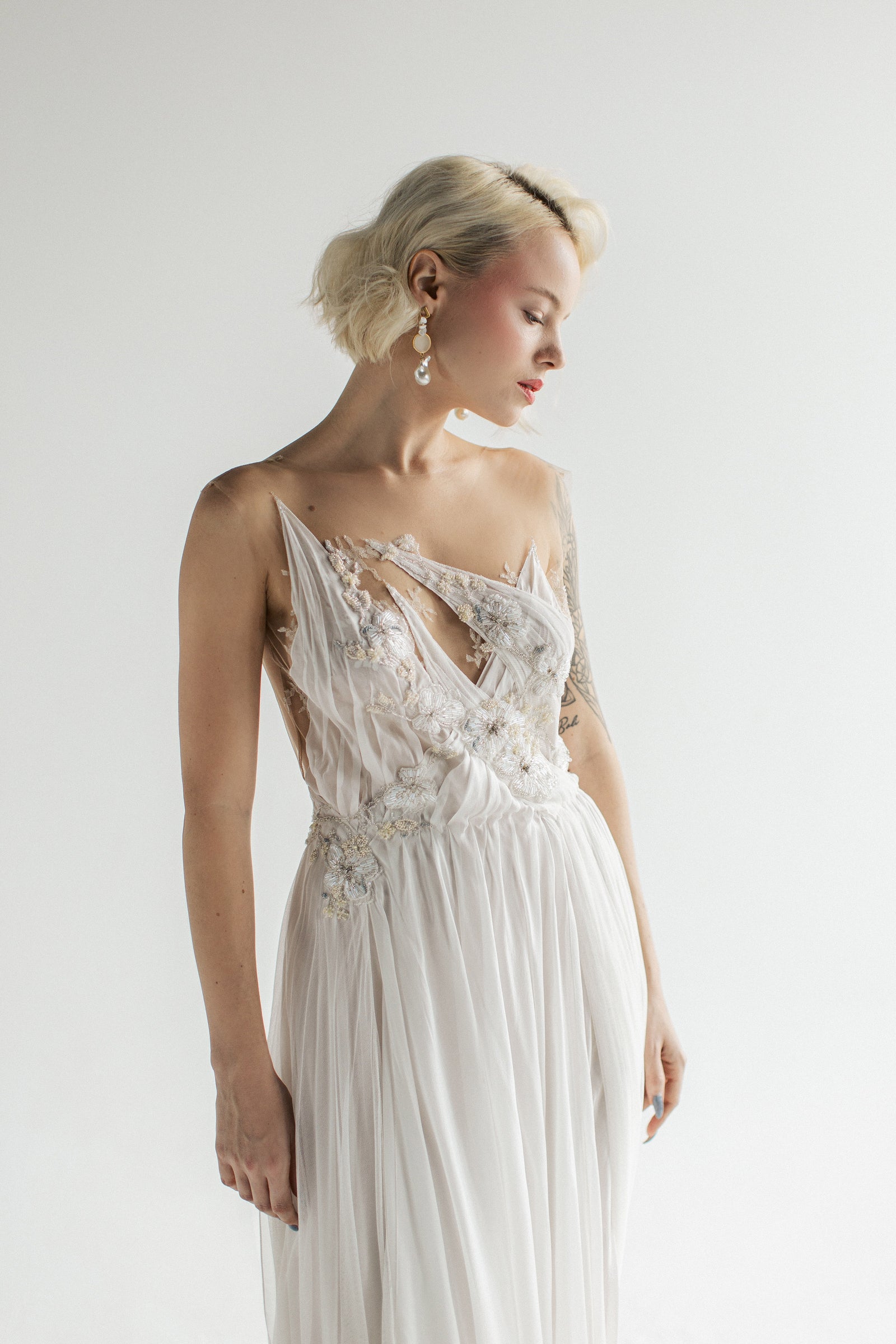
Before we begin, two important things to know.
First, body type is one factor of many. Personal style, comfort, venue, and the gown's storytelling all matter as much as silhouette. The flattering dress that makes you uncomfortable is not the right dress.
Second, every Mýwony gown is built to your own measurements in natural silk, with hand-applied lace and silk flowers, sewn in small batches by a named atelier team. Couture construction means the silhouette can be quietly adjusted — a hem softened, a waist raised half an inch, a sleeve drafted differently — to flatter exactly the body you have, rather than the average it was originally drafted for. So the rules below are starting points, not ceilings.
How to identify your body type
Your body type is determined by the relative proportions of your bust, waist, and hips. The simplest way to identify it is to take three measurements (using the same tape, in the same units, in well-fitting underwear) and compare them. If you have not done this yet, our complete measurement guide walks you through it step by step.
The three measurements you need are:
- Bust: circumference around the fullest part of your bust
- Waist: circumference at the narrowest part of your torso (your natural waist, not where your jeans sit)
- Hip: circumference around the fullest part of your hips and seat
Then compare:
- If bust ≈ hip and waist is at least 22–25 cm (9–10 in) smaller than both → hourglass
- If hip is meaningfully larger than bust (more than ~5 cm / 2 in) → pear
- If bust is meaningfully larger than hip and waist is closer to bust than to hip → apple
- If bust ≈ waist ≈ hip (all within ~5 cm / 2 in of each other) → rectangle
- If you are under 5'4" / 162 cm, you are also petite — overlay this with whichever shape above applies
- If you are over 5'9" / 175 cm or have a long torso relative to your height, you are tall / long-torso — overlay this with whichever shape applies
Most brides land cleanly in one category; some sit between two. If you are between hourglass and pear, treat yourself as both and try silhouettes from each list.
The body type chart at a glance
The full deep-dive for each silhouette appears in our wedding dress styles chart. The summary below tells you where to start; the sections below tell you exactly which Mýwony gowns to look at first.
| Body type | Most flattering silhouettes | Also try | Approach with care |
|---|---|---|---|
| Hourglass | Mermaid, trumpet, fit-and-flare, slip | A-line, ball gown, sheath, two-piece | Loose empire (hides the waist you have) |
| Pear | A-line, ball gown, empire | Fit-and-flare, grecian, two-piece | Mermaid, trumpet, slip, sheath |
| Apple | Empire, A-line, grecian, tiered | Fit-and-flare | Mermaid, slip, sheath, drop-waist |
| Rectangle | Ball gown, mermaid, tiered, fit-and-flare | A-line with defined waist, basque | Sheath (can read boxy), unfitted slip |
| Petite | A-line, empire, sheath, slip, tea-length | Fit-and-flare, grecian | Heavy ball gown, multi-tier, very long train |
| Tall & long-torso | Drop-waist, basque, trumpet, mermaid, sheath, slip | A-line, ball gown, fit-and-flare | Empire (visually shortens torso) |
Hourglass body type

The hourglass figure has balanced bust and hip measurements with a defined, narrower waist. It is the body type most often referenced in bridal marketing, and almost every silhouette flatters it — the question is which one flatters you most.
Silhouettes that follow the natural waist rather than disguising it work best. The mermaid and trumpet are the classics: both hug the body through the bust and hips before flaring, which highlights the proportional curve hourglass figures naturally have. Our Phaeno is a couture mermaid in translucent ivory mesh and tulle; the Silent Waterfall is its more romantic sister, with an ivory French lace bodice and a soft tulle skirt over blush-nude lining. The Ophelia trumpet is a softer version — close through the torso, then loose enough below mid-thigh that you can dance.
For brides who want minimalism rather than drama, the Rhiannon silk slip (from our 2024 collection) traces the hourglass shape without amplifying it. For couture two-piece looks, the Laetisse from our current Spells of the Whispering Forest collection pairs an off-shoulder silk crash chiffon blouse with a beaded tulle skirt — the seam at the natural waist is the most flattering hourglass design choice possible. The Silynne in dusty lavender, also from Whispering Forest, brings the basque waist back into play with its beaded lace corset.
What to look for if you are hourglass
- A defined waistline — natural, basque, or drop — cut to your own waist measurement, not a generic chart
- Bodice fabric that holds shape (silk satin, beaded lace, structured silk crash chiffon) rather than fabric that drapes loosely
- A plunging V or low scoop back to balance the silhouette
What to approach with care
- Loose empire silhouettes — they conceal the waist that is your asset
- Heavy ball gowns with stiff structured skirts that hide your hips
- Boxy sheaths that don't shape through the waist
Pear body type
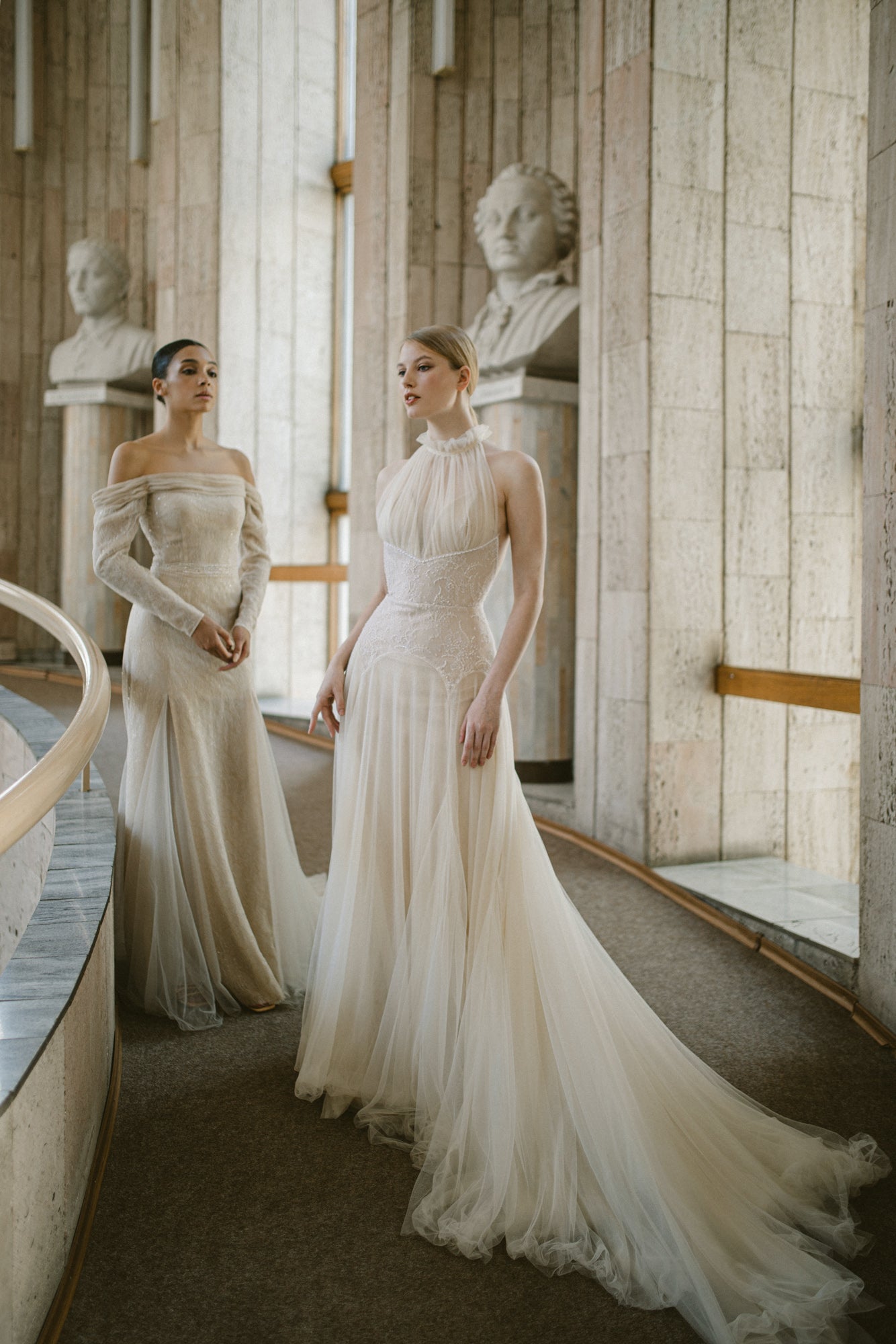
The pear figure has hips meaningfully fuller than the bust, with a defined waist. The strategy is to balance the silhouette by adding visual interest at the bust while skimming gracefully over the hips.
The A-line is the workhorse here. It defines the waist, then releases gently away from the hips in a continuous unbroken line — flattering on every pear figure. Our Lavinia is the classic Mýwony A-line, with a hand-applied floral lace bodice that draws the eye upward. The Calypso Nightfall (a soft ball gown built around a separate sleeveless top) and Calypso Daylight (a daylight-romantic version in champagne tulle over ivory satin) both work for pear figures because the volume of the skirt makes the hip width itself a design feature rather than a flaw.
Empire silhouettes are equally flattering. The Titania sits at the empire waist with a soft grecian fall through the skirt; the Aine from our 2024 collection is the cleaner ivory version; the Maia is a maternity-friendly empire in silk chiffon with floral pearl embroidery, and works beautifully on any pear figure who wants ease through the midsection. The Faelynne from the current Spells of the Whispering Forest collection is a romantic off-shoulder silk gown in dusty lavender — off-shoulder necklines are particularly effective on pear figures because they widen the visual line of the upper body.
What to look for if you are pear
- Detail at the bodice — embroidery, beadwork, hand-applied florals, or an interesting neckline
- Off-shoulder, V-neck, sweetheart, or square necklines that broaden the upper line
- A clearly defined natural or empire waist
- A skirt that flares cleanly from the waist or below it — not from the hip
What to approach with care
- Mermaid and trumpet silhouettes — they emphasize the hip without giving the eye relief
- Slip and column gowns — they trace exactly the proportion you may want to soften
- Heavy embroidery placed on the hip or skirt rather than the bodice
Apple body type

The apple figure carries weight through the midsection, with a fuller bust and a less-defined waist. The strategy is to draw the eye upward to the décolletage and shoulders, and let the fabric fall freely from just under the bust.
The empire silhouette is unbeatable here, because it places the waistline above the area you may want to soften and lets the skirt fall straight from there. The Titania is the Mýwony reference; the Aine is a cleaner ivory version; the Maia is the most forgiving of all — a high-waisted silk chiffon empire with floral pearl embroidery, originally drafted as maternity-friendly. The Brighid from our 2024 collection brings a slightly more grecian feel; the Amalthea is the most sculptural — a hand-draped silk chiffon bodice over a softly gathered silk chiffon skirt, fully lined in silk charmeuse.
The A-line is also a strong choice, because the soft flare from the natural waist disguises the midsection. The Lavinia works particularly well because the floral lace bodice adds visual interest above the midsection. Tiered skirts (like the Sironna) are another good option — the horizontal lines of the tiers actually break up the vertical line of the midsection rather than emphasizing it. From our current Spells of the Whispering Forest collection, the Elystra in dove grey is a long-sleeved ethereal gown that draws the eye upward to the lace sleeves and away from the midsection.
What to look for if you are apple
- An empire or just-below-bust waistline rather than a natural waist
- V-necks, scoop necks, and square necks that elongate the torso visually
- Fabric that drapes (silk crêpe, silk chiffon, soft tulle) rather than fabric that clings
- Detail at the bodice — sleeves, neckline, embroidery — that lifts the eye
- Long, flowing trains that extend the vertical line
What to approach with care
- Mermaid, slip, and sheath silhouettes — they trace the midsection
- Drop-waist and basque waist styles — they place a horizontal line across the area you may want to skim
- Heavy belts, sashes, or detail at the natural waist
Rectangle body type

The rectangle figure has bust, waist, and hip measurements within a few centimetres of each other — an athletic, straight, or boyish silhouette. The strategy is to create visual curves through the design of the gown, since the body itself is more linear.
The ball gown is the most dramatic option: a fitted bodice meeting a voluminous skirt creates the illusion of a smaller waist by contrast. The Calypso Nightfall with its multi-layered tulle skirt and separate beaded top is a couture example; the Calypso Daylight brings the same architecture in ivory and champagne. For brides who want curves without ballgown formality, the mermaid silhouette — particularly when paired with a fitted bodice that has structural shaping — works beautifully. The Phaeno uses a corset-like base under translucent mesh to create exactly this kind of structural curve.
Tiered skirts are another excellent rectangle option, because the horizontal layers create the illusion of curve. The Sironna in blue-grey is the Mýwony reference. From our Spells of the Whispering Forest collection, the Silynne uses a basque-waist beaded lace corset to add an architectural waistline that a rectangle figure may not naturally have; the Vea uses beaded lace at the bodice for the same purpose.
What to look for if you are rectangle
- Volume in the skirt — ball gown, full A-line, tiered, or layered
- A structured bodice that creates a defined waist (corsetry, boning, beaded panels)
- Drop-waist and basque waist styles — they create a curve where the body has none
- Belts, sashes, or strong horizontal seams at the waist
What to approach with care
- Plain sheath silhouettes — can read boxy on a straight figure
- Unfitted slip dresses without bodice shaping
- Loose empire dresses without bust definition
Petite body type (under 5'4" / 162 cm)

Petite is a height category rather than a body shape — a petite bride may be hourglass, pear, apple, or rectangle, and should layer those guidelines on top of the petite-specific advice below. The core strategy for petite brides is to choose silhouettes that lengthen the visual line of the body rather than shortening it.
Slim, vertical silhouettes work best. The Cressida, a sheath in natural silk satin with volumetric illusion sleeves, is one of the most flattering Mýwony cuts on a petite figure — the straight line from shoulder to hem reads tall. The Portia, a column gown with chiffon inserts down the skirt, has the same effect with more bohemian drama. The Rhiannon silk slip from our 2024 collection lengthens with bias-cut fluidity. For brides who want volume, an A-line that flares from the natural waist (rather than the hip) — like the Lavinia — keeps the line clean.
Empire silhouettes are also strongly flattering on petite frames because they place the waistline high, which makes the legs appear longer. The Titania and Maia both deliver this effect. From the current Spells of the Whispering Forest collection, the Laetisse two-piece works particularly well because the visible seam at the natural waist creates two visual sections rather than one long one.
What to look for if you are petite
- Vertical silhouettes — sheath, slip, column, or A-line that flares cleanly from the waist
- Empire waists that elongate the leg line
- Tea-length and floor-length hemlines (avoid mid-calf, which can shorten the leg)
- Small to medium veils that don't overwhelm the frame
- V-necks and deep necklines that elongate the upper body
What to approach with care
- Heavy ball gowns with multiple layers of skirt fabric — the volume can swallow a petite frame
- Multi-tier dresses with very thick tiers — can read horizontal and shorten the line
- Very long trains (cathedral or longer) — proportionally too dramatic for petite height
- Wide horizontal embellishment at the hip
Tall and long-torso body type (over 5'9" / 175 cm)

Tall brides have one of the most enviable starting points in bridal — almost every silhouette photographs beautifully on a tall figure. The strategy is the opposite of petite: rather than lengthening, you can section the line with horizontal interest, which prevents the gown from reading too vertical or too columnar.
Drop-waist and basque-waist gowns are particularly flattering, because the lowered waist breaks the line at exactly the right proportion for a long torso. Mermaid and trumpet silhouettes are also excellent — the Silent Waterfall with its ivory French lace bodice and soft tulle mermaid skirt was practically designed for a tall figure. The Phaeno mermaid is the more contemporary option. The November trumpet, with its off-shoulder scalloped French lace bodice and beaded tulle skirt, gives the same effect with softer drama.
Sheath and slip gowns work because tall brides can wear them without the silhouette reading boxy. The Cressida, Portia, and Rhiannon are all strong picks. From the current Spells of the Whispering Forest collection, the Silynne with its beaded lace corset and basque waist is one of the best Mýwony cuts on a long-torso bride — the basque line is exactly the proportion-breaking detail you want.
What to look for if you are tall or long-torso
- Drop-waist or basque-waist seams that break the vertical line at the hip
- Horizontal detail — tiered skirts, embroidered hemlines, contrast belts or sashes
- Long sleeves and full skirts that use the proportion you naturally have
- Cathedral-length and chapel-length trains — tall figures carry them beautifully
- Two-piece and separates that introduce a visible waist seam
What to approach with care
- Empire silhouettes — can visually shorten a long torso
- Very high-cut hemlines like mini and tea-length that emphasize leg length disproportionately (unless intentional for a reception look)
A note on plus-size brides
"Plus size" is not a body type — a plus-size bride may be hourglass, pear, apple, or any of the other shapes — so the guidelines above apply equally. What matters most for plus-size bridal is fit and construction quality. A well-constructed gown with internal corsetry, structured bodice support, and properly placed seams can be more flattering than any single silhouette choice.
Because every Mýwony gown is cut to your own measurements rather than to a generic chart, the question of "do they make this in my size?" doesn't really apply — we draft the pattern from your numbers. For more specific guidance, our companion article on expert tips for choosing plus-size bridal gowns goes into the construction and styling details that matter most.
Beyond body type — what really matters
Body type is a useful starting point and a terrible ceiling. The brides who feel most beautiful on their wedding day are not those who followed every rule perfectly, but those who chose a gown that felt like an extension of themselves. Three things matter more than silhouette:
- Fit. A perfectly-fitted A-line in your second-best silhouette will photograph better than a poorly-fitted mermaid in your "ideal" one. This is the single biggest reason couture and made-to-measure exist.
- Comfort. A wedding day is fourteen hours of moving, dancing, sitting, and embracing people. A gown that prevents any of that is the wrong gown, no matter what the chart says.
- Story. The dress should feel like yours — not like the most flattering option a stylist could find. Every Mýwony gown has a name and a meaning (Laetisse is "The Rain's First Breath"); we believe a wedding gown is most beautiful when the bride's own story is the loudest thing in the room.
Frequently asked questions
What is the most flattering wedding dress shape for my body?
It depends on your body type. For hourglass figures, mermaid, trumpet, and fit-and-flare silhouettes that follow the natural waist are most flattering. For pear figures, A-line and ball gown silhouettes that define the waist and skim the hips work best. For apple figures, empire and grecian silhouettes that fall from just under the bust hide the midsection most gracefully. For rectangle figures, ball gown, mermaid, and tiered silhouettes create curves where the body is straighter. For petite brides, vertical silhouettes (sheath, slip, column, A-line) lengthen the visual line. For tall brides, drop-waist and basque-waist styles, mermaids, and trumpets all flatter beautifully.
How do I know my body type for a wedding dress?
Take three measurements: bust (fullest part), waist (narrowest part of the torso), and hip (fullest part of the hips and seat), all to the same accuracy and unit. Compare: hourglass = balanced bust and hip, defined waist; pear = hip larger than bust; apple = bust larger than hip with less-defined waist; rectangle = bust ≈ waist ≈ hip; petite = under 5'4" regardless of shape; tall / long-torso = over 5'9" or with a notably long torso. Most brides land cleanly in one category. The Mýwony measurement guide walks you through the readings.
What wedding dress style is best for a pear-shaped body?
A-line is the gold standard for pear figures, because it defines the waist and skims the hips in a continuous line. Ball gowns, empire silhouettes, and grecian draping also work beautifully because they all draw the eye upward. Pair these with detail at the bodice (embroidery, beadwork, off-shoulder or V-neck necklines) to balance the silhouette. Avoid mermaid, trumpet, slip, and column gowns — they trace exactly the line you may want to soften.
What wedding dress style suits an apple body shape?
Empire silhouettes are the most flattering on apple figures. The waistline sits just below the bust, so the skirt falls straight from there and skims rather than clings to the midsection. A-line silhouettes (which define the waist softly and flare gradually) and grecian silhouettes (which add pleating and visual interest) are also excellent. V-necks, scoop necks, and long sleeves help draw the eye upward. Avoid mermaid, slip, and sheath gowns; avoid drop-waist and basque waists that place a horizontal line across the midsection.
What is the best wedding dress for an hourglass figure?
Anything that follows the natural waist rather than disguising it. Mermaid and trumpet silhouettes are the most dramatic, since they hug the bust and hips before flaring; fit-and-flare and slip gowns are quieter versions of the same idea. Ball gowns and A-lines also work beautifully because they define the waist by contrast with the skirt's volume. Two-piece gowns with a clear seam at the waist (like the Mýwony Laetisse) are particularly flattering, because the seam itself becomes a design feature.
What dress style is best for a rectangle body type?
Anything that creates the illusion of curves the body doesn't naturally have. Ball gowns are the most theatrical option: the fitted bodice meeting a voluminous skirt creates a defined waist by contrast. Mermaid silhouettes with structured bodices (corset-style or beaded) create curves through architecture. Drop-waist and basque-waist styles place a defined horizontal line that adds shape. Tiered skirts and dresses with belts or sashes also work well. Avoid plain sheaths and unfitted slip dresses, which can read boxy on a straight figure.
What wedding dress is best for a petite bride?
Vertical silhouettes that lengthen the visual line. Sheath, slip, column, and A-line gowns that flare cleanly from the waist all elongate the figure. Empire waists that sit high also work because they make the legs appear longer. Avoid heavy ball gowns, multi-tier skirts with thick tiers, and very long cathedral trains, which can overwhelm a petite frame proportionally. Mid-calf hemlines (true tea-length) tend to shorten the line; if you want a short dress, go above the knee or stay floor-length.
What wedding dress is best for a tall bride?
Tall brides have an advantage: almost every silhouette flatters. Mermaid, trumpet, drop-waist, and basque-waist gowns are particularly beautiful because they section the long vertical line of the body at flattering points. Sheath, slip, and column dresses also work because tall brides can carry them without the silhouette reading boxy. Cathedral or chapel-length trains, full skirts, and two-piece gowns with a clear waist seam are all strong choices. Empire silhouettes are the one to be careful with — they can visually shorten a long torso.
Does body type matter more than wedding dress style?
No. Body type is a starting point that helps narrow the search; the silhouette that flatters you most is rarely the silhouette you ultimately wear, because personal style, comfort, venue, and the story of the gown all matter as much. Fit and construction quality matter more than any silhouette choice — a perfectly-fitted A-line will always photograph more beautifully than an imperfectly-fitted mermaid.
How do I find a wedding dress that flatters me if I'm between body types?
Treat yourself as both, and try silhouettes from each list. A bride who is between hourglass and pear might love a fit-and-flare (which flatters both) or an A-line with a beaded waist (which defines waist like an hourglass dress and skims hip like a pear dress). A bride between apple and pear might find empire silhouettes ideal, since they hide the midsection (apple advice) and let the skirt fall freely from the bust (pear advice). When in doubt, try the silhouette in person — the dressing-room mirror is a better guide than any chart.
Beginning your search
Once you know your body type, the next step is to see a few of the recommended silhouettes in person. You can browse our current couture collection Spells of the Whispering Forest, which includes silhouettes for every body type, the full Mýwony bridal collection, or the 2024 collection. To go deeper on any individual silhouette, our wedding dress styles chart walks through every cut in detail. And when you are ready to begin a fitting, our measurement guide will save you time at the first appointment.
If you would like to see how Mýwony interprets the bohemian silhouettes specifically, our complete bohemian wedding dress guide goes into the soft, ethereal end of bridal in detail. And for a sense of where the season is heading, our 2026 trend report covers the silhouettes, fabrics, and details defining bridal this year.