
2026 Wedding Dress Trends: What's In, What's Out (And What Actually Matters)
Every year the bridal industry tries to describe what brides are wearing this season. Every year the truth is more interesting than the press releases. Below is a quieter, more honest look at 2026 — what has arrived, what is beginning to fade, and what is worth paying attention to if the dress you choose has to belong to you for the rest of your life.

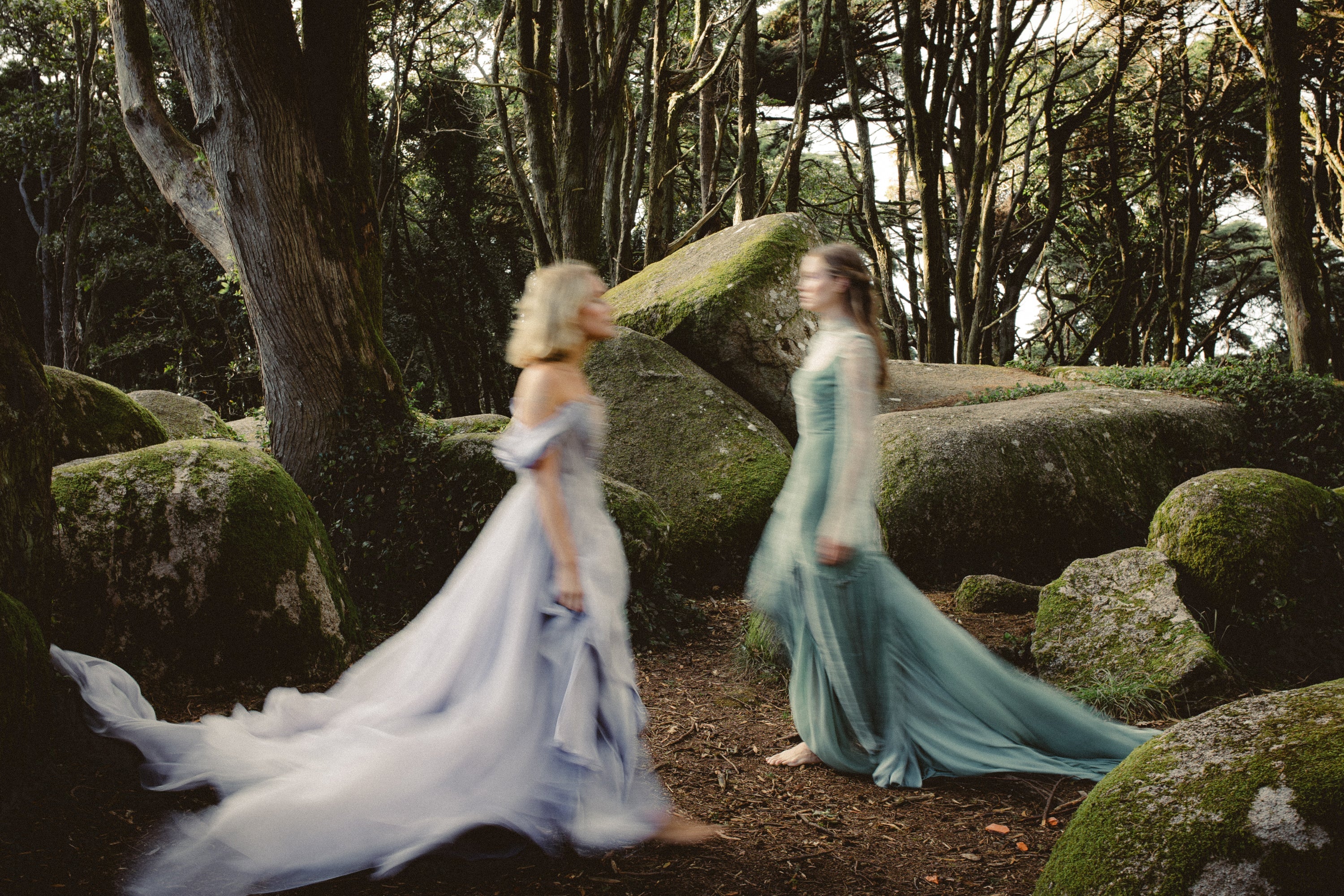
Mýwony has been designing bridal gowns in small batches since 2016, and the single clearest thing about the 2026 season is that brides are tired of the algorithmic, tired of the look-book of identical gowns, and tired of the pressure to dress for the photograph rather than the day. The trends that have emerged this year reflect that shift. Volume is back — but softer. Color is in — but gentler. Florals are everywhere — but hand-applied rather than printed. And the "it gown" of 2026 is actually ten different gowns, all quietly refusing to look the same.
We have grouped this report into ten trends that are actually shaping the 2026 wedding dress, followed by a short list of what is fading, and a note on how to choose a current dress without dating your wedding photographs.
The mood of 2026
Before the individual trends, one meta-observation. The 2024 wedding wore structure and sparkle. The 2025 bride moved toward quiet luxury and minimalism. The 2026 bride has settled somewhere softer than either — a considered romanticism. Think botanicals instead of bedazzling; pearl instead of rhinestone; a single statement sleeve instead of a maximalist everything-at-once. The word most designers are using off-the-record is composed. A 2026 wedding dress is a composed dress.
If 2024 was about making an entrance and 2025 was about making a statement by not trying to, 2026 is about making a dress that feels like you.
Trend 1 — Romantic volume returns
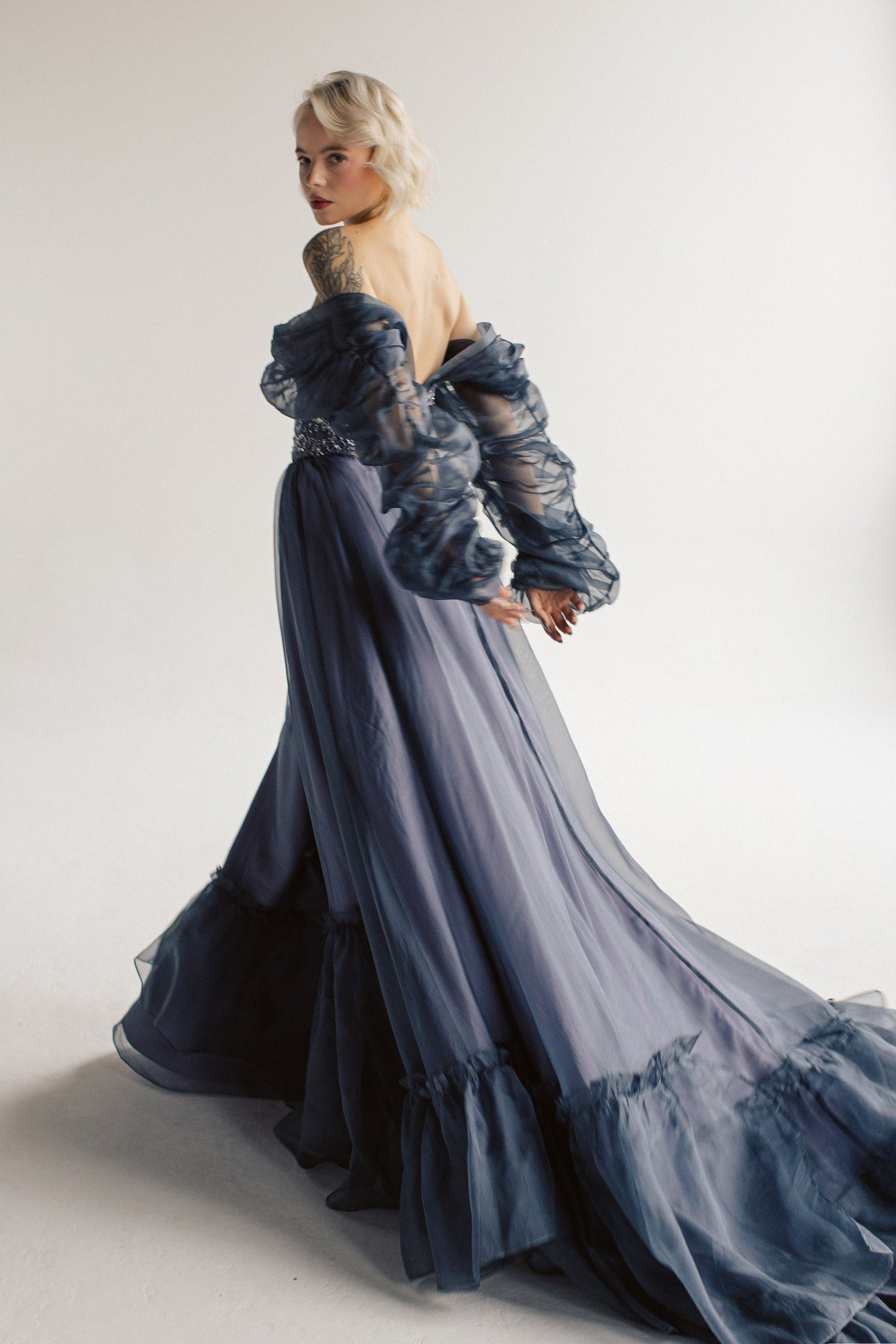
After several seasons of minimalist slips and bare-shouldered bodices, volume has returned to the bridal silhouette — but the volume of 2026 is gentler than the volume of 2018. Puff sleeves remain, but the exaggerated cartoonish puff has softened into a rounded, sculptural shape that flatters rather than dominates. Bell sleeves have come back with real momentum, especially in soft lace or silk organza. Off-shoulder sleeves — of the kind that drift down the arm rather than sit stiffly across it — are everywhere. What unites them is movement: 2026 volume is designed to billow and sway, not to hold a shape.
Our Flidais gown, with its off-the-shoulder voluminous sleeves that evoke forest branches, is a particularly Mýwony reading of this trend. For a softer version, the Ophelia carries the same off-shoulder romance at a more restrained scale.
How to wear it in 2026
- Choose one volume element — sleeve or skirt, not both — so the dress reads composed rather than costumed
- Pair voluminous sleeves with a fitted bodice and a simple skirt to balance proportions
- Avoid the stiff, structured puff sleeve; look for soft, draped volume that moves
Trend 2 — The basque and drop-waist revival
The drop-waist has reappeared in nearly every 2026 bridal collection, and this one is a genuine trend rather than a runway whisper. The modern basque waist — a bodice that descends to a point below the natural waistline before releasing into a skirt — is both deeply flattering and quietly vintage, reaching back to the 1920s and the 1990s bridal moments at once. It works particularly well in silk crêpe and in lace. For bohemian brides, the drop-waist is often rendered with a softer curve rather than a dramatic V, and paired with a long, fluid skirt rather than a dropped flounce.
How to wear it in 2026
- Look for a basque line that sits one to three inches below the natural waist — lower than that starts to look 1920s-literal
- The drop-waist is most flattering on hourglass and long-torso figures; petite brides should test the silhouette carefully
- Pair with a simple neckline to let the waistline do the talking
Trend 3 — Three-dimensional floral appliqué everywhere
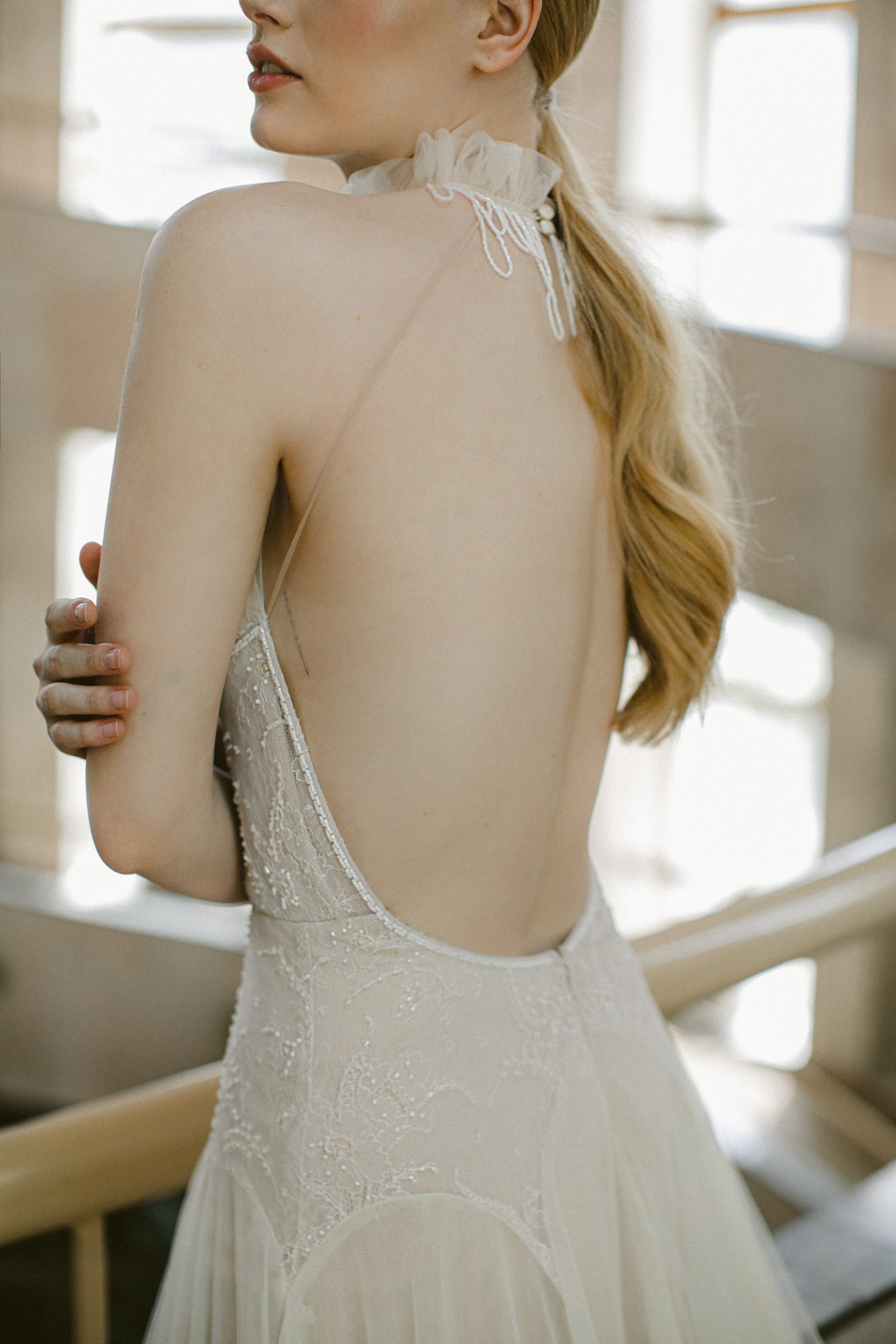
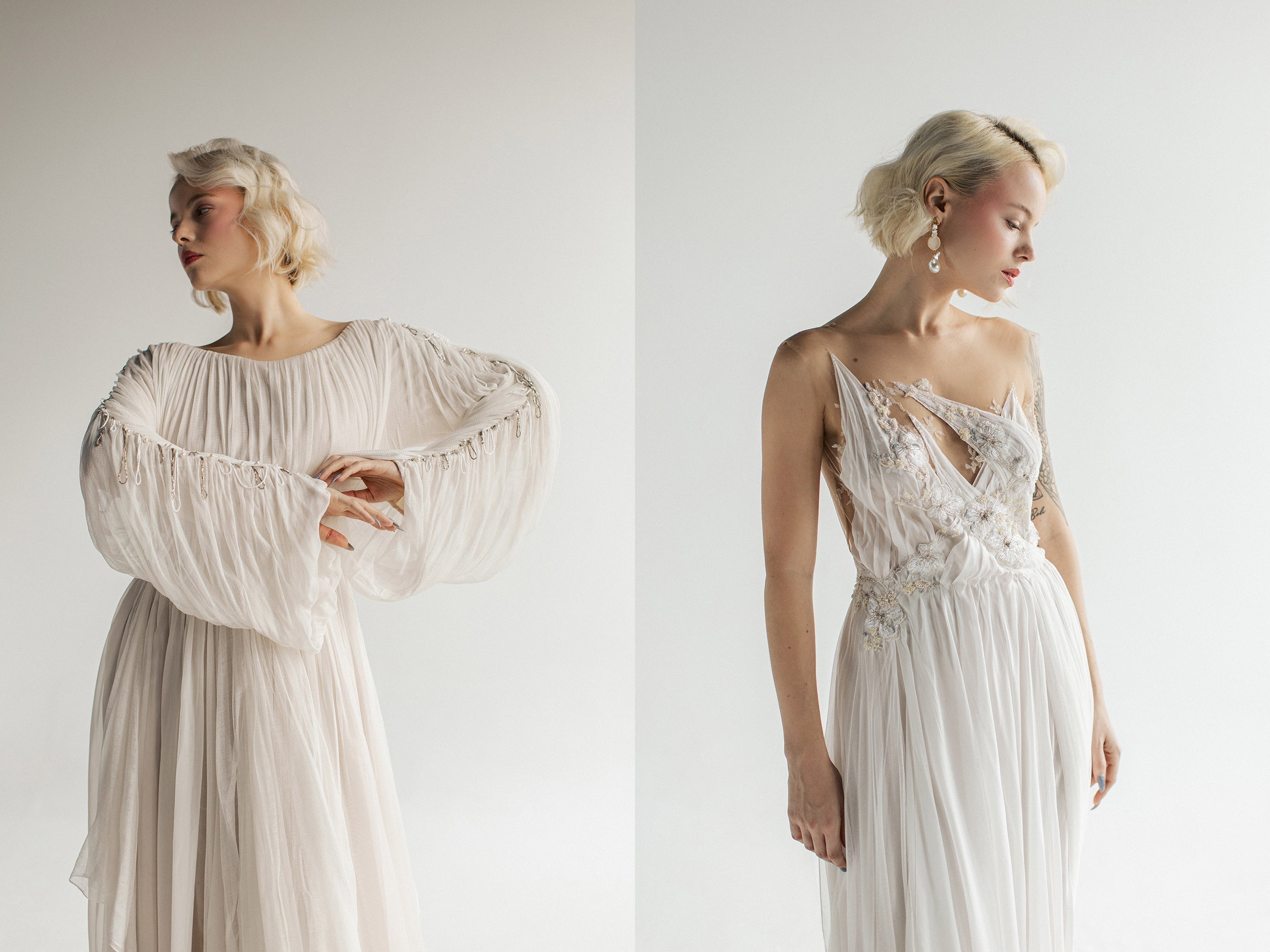
If there is one detail that defines 2026 bridal, it is the three-dimensional floral. Hand-cut lace petals, sculpted fabric blooms, botanical embroidery that lifts off the surface of the gown — they are on bodices, scattered across skirts, concentrated at hemlines, and climbing illusion sleeves. Unlike the all-over lace of the 2010s, 2026 florals are placed, not patterned. A gown might have twelve hand-applied blooms instead of a hundred — the restraint is part of the point.
You can see how Mýwony approaches this in the Lavinia, whose bodice is built from hand-applied floral lace, and throughout our Living Art collection, where the three-dimensional bloom is treated almost as a sculptural element.
How to wear it in 2026
- Prioritize placement over density — a few beautifully placed florals read more modern than an all-over pattern
- Ask about fabric: true 3D florals are cut from lace or silk, not printed or heat-pressed
- Consider tonal florals — ivory on ivory, champagne on champagne — for the most editorial effect
Trend 4 — Color beyond ivory

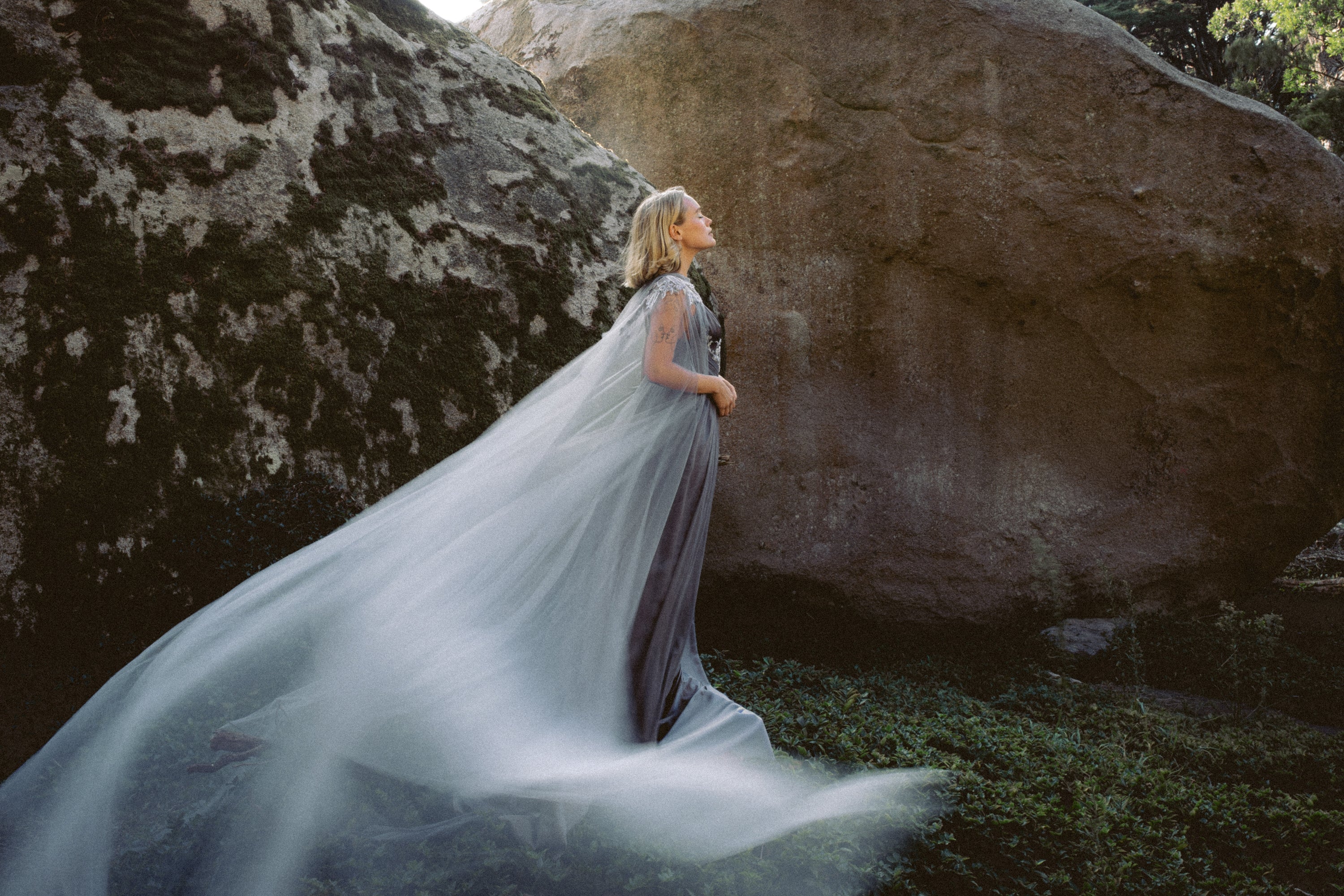
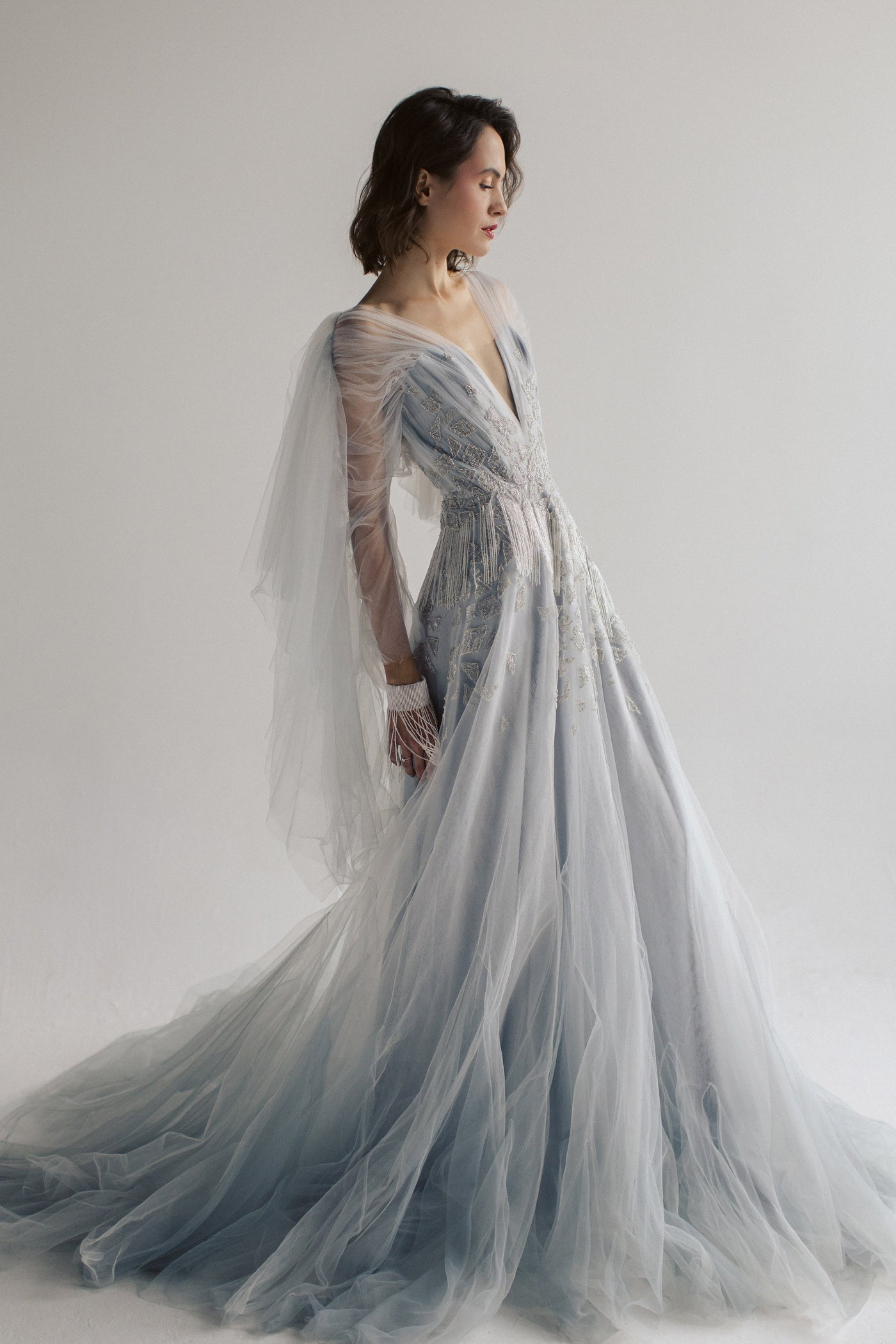
The pure-white wedding dress is no longer the default. Champagne, light grey, pale blue-grey, blush, soft peach, and even darker departures (black, midnight blue) have moved from editorial outliers to genuine consumer choices. This is partly aesthetic — warmer tones photograph beautifully and flatter a wider range of skin tones — and partly psychological: brides are increasingly comfortable choosing a color that reflects their personality rather than an inherited convention.
Mýwony has always worked in this broader palette. The Danu in champagne, the Rhiannon in light grey, the Sironna in blue-grey, the Maeve in black — each is a fully bridal gown, just not one in traditional white.

How to wear it in 2026
- Champagne and warm ivory flatter almost every skin tone — try both in person
- If you love white but want a hint of color, ask about a tonal overlay (e.g., blush tulle over ivory silk)
- Darker colors (black, navy, deep green) read most bridal when the cut and styling are unmistakably wedding — long veil, bouquet, ceremony context
Trend 5 — The modular wedding dress

The single biggest structural shift in 2026 bridal is the rise of the modular gown. Brides want a dress that can work for the ceremony and the reception; for the first look and the afterparty; for the ballroom and the dance floor. That means detachable sleeves, removable overskirts, convertible trains, swappable bows, and increasingly, two-piece sets designed to be reassembled in different ways across the day.
Our Calypso Nightfall gown, with its separate sleeveless top over a layered skirt, is a classic example of the philosophy — and the Peony skirt is explicitly designed as a separate, to be paired with the top or lace piece of your choice.
How to wear it in 2026
- Ask about detachable elements early — most designers will build them in if you request it, but they should be designed from the start, not added later
- Plan your "second look" in the fitting, not on the day — know exactly what comes off, when, and by whom
- Two-piece sets travel brilliantly; if you are having a destination wedding, a separates-based gown is often the smartest choice
Trend 6 — Pearls as the new sparkle
Rhinestones and crystals have been quietly replaced by pearls across nearly every 2026 collection. Micro-pearls scattered across bodices; pearl trim on veil edges; pearl buttons running up a long back; single-pearl droplets at the ends of illusion sleeves. Pearls read softer on camera than crystals, flatter more skin tones, and have an heirloom quality that crystalline sparkle lacks. For bohemian brides, pearl detailing feels genuinely new after years of crystal embroidery, without feeling costume.
The Ophelia gown takes a particularly modern approach, pairing tiny paillettes with pearl-like beading to catch light at a lower volume than a fully crystalline gown would. The Flidais corset uses beading in the same gentle, distributed way.
How to wear it in 2026
- Pearls work in almost any volume — a single strand in the hair, a pearl-trimmed veil, or an all-over pearl-encrusted bodice
- Mix pearl sizes rather than using one uniform pearl — it reads more organic and more expensive
- Pair pearl detail with a matte fabric (silk crêpe, cotton voile) to let the pearls do the light-catching work
Trend 7 — The illusion back and sheer panel

Illusion fabrics — the fine tulles and meshes that read as bare skin with embroidered accents floating over them — have gone fully mainstream in 2026. The illusion back in particular is everywhere: a low scoop framed in tulle, a V of sheer panel scattered with florals, a buttoned illusion extending from nape to waist. It is a way to create openness (a key 2026 value) without losing coverage in the ceremony itself, and it photographs beautifully from behind — which is, as it happens, the most-photographed angle of a wedding dress.
The Ophelia illustrates the idea at a quieter scale: illusion mesh at the neckline, semi-sheer silk chiffon inserts at the hem. The Lavinia uses illusion in its sleeves and neckline, letting embroidered florals float on what reads as bare skin.
How to wear it in 2026
- Quality of the mesh matters enormously — fine European mesh reads as skin; cheaper mesh reads as netting
- The best illusion panels are asymmetrical or scattered — a perfectly uniform embroidery grid dates the gown immediately
- If you are unsure, try a small illusion detail (a scoop back) before committing to a full illusion bodice
Trend 8 — Tea-length, midi, and the short-dress moment
Short wedding dresses are having their biggest moment since the 1960s, led by courthouse ceremonies, elopements, reception second-looks, and a generation of brides who simply prefer a hemline that lets them move. Tea-length (mid-calf), midi (just below the knee), and even above-the-knee minis are all on the table for 2026. The silhouettes tend to be soft — A-line, tulle, or slip — and often serve as the reception-half of a ceremony gown.
How to wear it in 2026
- A tea-length dress in silk crêpe or embroidered tulle reads as bridal; a minidress in satin may not — fabric matters
- Short dresses are ideal reception-looks paired with a longer ceremony gown — consider a two-dress wedding if your venue and budget allow
- Shoes matter more in a short dress; choose them as carefully as the gown
Trend 9 — The rise of the two-piece

Closely related to the modular trend but distinct enough to stand alone: the two-piece bridal look. A fitted lace or beaded top over a separate skirt is, for many 2026 brides, the answer to the question of how to have a wedding dress that feels like them. It allows mixing of textures (a heavy-beaded top over a liquid silk skirt), flexibility of silhouette (one top, two skirts), and a more body-honest fit than a single unified gown often permits.
The Peony skirt is one of our longest-running separate pieces — softest layered tulle in champagne, sand, and peach — designed to pair with almost any top in the collection. The Aine gown can be worn as a unified dress or styled as separates; the coordinating Aine veil extends the composition.
How to wear it in 2026
- Two-piece sets are most flattering when the top is slightly fitted and the skirt carries the volume
- Texture contrast (lace top + silk skirt, or beaded top + tulle skirt) makes the separation look intentional
- Fit both pieces together, not separately — the seam line between them is what makes or breaks the look
Trend 10 — The quiet bow
Bows had a loud 2024 and 2025; in 2026 they have calmed down. The enormous back-of-dress oversized bow has softened into a smaller, more architectural statement — a single bow at the waist, a ribbon tied at the back of a low neckline, a fabric bow on the back of a veil. Bow detail now functions almost as a signature rather than a centerpiece. It is still very present; it simply does less of the work.
How to wear it in 2026
- Place the bow at the back waist or a single shoulder rather than across the whole back
- Match the bow fabric to the gown fabric — satin bow on satin, tulle bow on tulle
- A tied ribbon reads more 2026 than a structured, sculptural bow
What's quietly fading out
For balance, here is what 2026 is letting go of — not with scorn, but with a change of heart. If your heart is still with any of these, wear them anyway; trends are descriptive, not prescriptive.
- The heavily-structured strapless ball gown — after a decade of dominance, it has been replaced by softer A-lines and empire silhouettes
- All-over crystalline sparkle — pearl and matte beading have replaced full-body rhinestone embroidery
- Pure optical white — warmer ivories, champagnes, and natural tones are now the default for natural-fabric gowns
- The perfectly symmetric Chantilly-lace all-over pattern — placed florals have replaced the uniform pattern
- The oversized back bow — softened into a smaller, quieter statement
- Mermaid silhouettes with heavy boning — still worn, but less dominant; softer sheath and trumpet cuts are taking their place
- Matchy-matchy bridal parties — mixed palettes and silhouettes in the wedding party are the new norm
How to choose a trendy dress without dating your wedding photos
The most useful thing you can do before committing to a trend is ask: will I still feel like myself in this in five years? Trends are always real in the season they arrive; they become dated when they hardened into a "look" that belonged to one year only. Here are four ways to lean into 2026 without freezing your photos in 2026.
- Pick one trend, not three. A dress with puff sleeves, a basque waist, pearl detailing, and an illusion back dates faster than a dress with one well-chosen trend and classic lines around it.
- Favor shape over surface. A silhouette (A-line, slip, sheath) ages slowly. A specific fabric treatment (a particular embroidery pattern, a particular lace motif) dates quickly. Spend your "trend" budget on the surface, not the silhouette.
- Natural fibers age better than synthetics. Your photos will last longer than the gown itself. A silk or cotton dress photographed in 2026 will feel timeless in 2046. A polyester gown from any year usually won't.
- Trust your own instincts over the algorithm. If a trend does not make sense for your body, your venue, or your vocabulary of style, skip it. Nothing ages faster than a dress you wore because you felt you had to.
The Mýwony view on 2026
At Mýwony we have always been interested in gowns that outlast the season they were made in. The 2026 collection is, in that sense, a return to our own principles — natural fabrics, handmade detail, shapes that flatter the body rather than sculpt it, and color palettes that include more than one kind of white. If any of the trends above speak to you, we would be glad to show you how we interpret them. You can explore our full bohemian wedding dress collection or the 2024 collection that many of these trends trace back to, and if you would like to begin with measurements, our measurement guide is the best place to start.
Frequently asked questions
What is the biggest wedding dress trend in 2026?
The single largest shift in 2026 bridal is the return of romantic volume — particularly soft puff sleeves, bell sleeves, and off-shoulder styles — paired with three-dimensional hand-applied floral detailing. After several seasons of minimalist slips and bare shoulders, brides are embracing softer, more constructed shapes again, but in gentler, more movement-forward forms than the structured volumes of 2018–2019.
Are bohemian wedding dresses still in style in 2026?
Yes — and arguably more so than in the last five years. Bohemian bridal has matured from its 2010s festival origins into a more refined, couture-leaning aesthetic that aligns closely with 2026's broader shift toward natural fabrics, quiet luxury, and placed (rather than all-over) detailing. The 2026 bohemian bride is likely to choose a soft A-line in silk georgette or a simple slip in light grey, rather than a fringed maxi in ivory.
What wedding dress colors are trending in 2026?
Pure optical white is no longer the default. The most-chosen colors of 2026 are warm ivory, champagne, light grey, pale blue-grey, and blush. Darker departures — black, midnight blue, deep green — are also increasingly common, especially for second looks, reception dresses, or brides whose personal aesthetic has always leaned away from white. Champagne, in particular, has moved from editorial outlier to mainstream default for warmer-skinned brides.
Are short wedding dresses trendy in 2026?
Yes. Tea-length, midi, and mini wedding dresses are all having their biggest moment since the 1960s, driven by courthouse ceremonies, elopements, destination weddings, and a desire for a hemline that lets you move. Short dresses also work beautifully as second looks paired with a longer ceremony gown. Fabric matters: a tea-length dress in silk crêpe or embroidered tulle reads unmistakably bridal; a minidress in shiny satin may not.
What is the difference between 2025 and 2026 wedding dress trends?
2025 was defined by quiet luxury, minimalism, and the slip-dress dominance. 2026 has softened that minimalism with a return of romantic volume (puff and bell sleeves), placed three-dimensional florals, and broader color palettes. The biggest structural change is the rise of the modular gown — detachable sleeves, skirts, and overlays designed for multiple looks in one day. Pearls have replaced crystals as the preferred embellishment.
Are puff sleeves still trendy for weddings in 2026?
Yes, but in softer form. The exaggerated, highly structured puff sleeve of 2019–2020 has given way to a rounded, sculptural shape that sits more gently and moves with the body. Bell sleeves in soft lace or silk organza are equally prominent, and off-shoulder sleeves that drift down the arm are dominant in bohemian and garden-wedding contexts. The rule for 2026: pair a voluminous sleeve with a fitted bodice and a simple skirt so the dress reads composed.
What wedding dress trends are going out of style?
Quietly fading in 2026: the heavily-structured strapless ball gown, all-over crystalline rhinestone embroidery, pure optical white, perfectly symmetric Chantilly-lace all-over patterns, the oversized back bow, heavily boned mermaid silhouettes, and matchy-matchy bridal parties. None of these are "wrong" to wear — they simply no longer define the center of bridal fashion. If you love them, wear them regardless.
How can I choose a trendy 2026 wedding dress without dating my photos?
Four rules: (1) pick one trend, not three — a dress stacked with 2026 signifiers will date faster than one trend layered over classic lines; (2) favor shape over surface, since silhouettes age slowly and specific embroidery patterns age quickly; (3) choose natural fibers (silk, cotton, linen) over synthetics, which photograph and age more gracefully; and (4) trust your own instincts over trend lists — the dress you love in your own voice will feel timeless in any era.
Are two-piece wedding dresses in style in 2026?
Yes, significantly. The rise of the modular gown is one of the defining structural trends of 2026, and the two-piece set (fitted top + separate skirt) is its clearest form. Two-piece gowns allow texture contrast, silhouette flexibility, separate-look ceremony and reception outfits, and better travel for destination weddings. The key styling rule is that the top and skirt should be fitted together (not separately) so the seam line sits cleanly.
Beginning your 2026 dress search
Whichever of these trends speak to you — and whichever do not — the most important thing a 2026 bride can do is start earlier rather than later. The best bohemian and made-to-measure gowns take six to nine months to build, and the calendar fills fastest in late spring and early autumn. If you would like to see any of the gowns in this guide in person, or have us build a custom version inspired by a trend we have covered, we would be delighted to begin the conversation.
Browse the full Mýwony bridal collection, begin with our measurement guide, read the stories of real Mýwony brides, or learn more about the atelier. We are always glad to help you begin.